
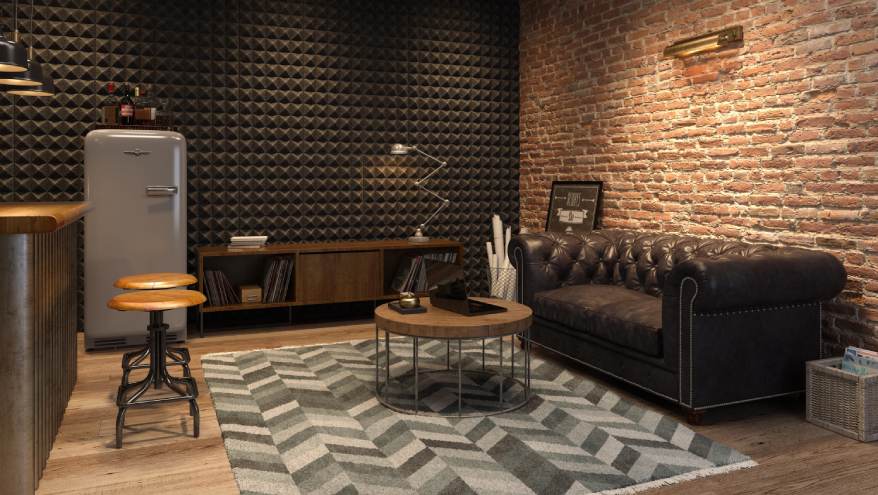
Noise affects more than comfort. In commercial buildings, offices, schools, healthcare facilities, and industrial environments, poor acoustics can reduce productivity, interfere with communication, and create stressful environments for employees, customers, and occupants.
Effective noise control starts with understanding that not all acoustic materials work the same way. Some materials are designed to block sound transmission between spaces, while others absorb reflections and reduce echo inside a room. In many commercial environments, the best acoustic performance comes from combining multiple strategies into a complete sound management system.
Below, we explore 10 types of soundproofing and acoustic materials commonly used for noise reduction, speech privacy, reverberation control, and commercial acoustic treatment.
Quick Comparison: Soundproofing vs Acoustic Materials
| Material Type | Primary Purpose | Best Applications |
| Mass Loaded Vinyl | Block sound transmission | Walls, ceilings, mechanical rooms |
| Soundproof Windows | Reduce exterior noise | Offices, healthcare, urban buildings |
| Door Seals | Seal sound leakage gaps | Studios, conference rooms |
| Resilient Channels & Isolation Clips | Reduce vibration transfer | Wall and ceiling assemblies |
| Viscoelastic Damping Compounds eg Green Glue Quietglue Pro | Damping vibrations | Multi-layer drywall systems |
| Acoustic Panels | Reduce echo and reverberation | Offices, schools, restaurants, studios, |
| Wood Slat Panels | Acoustic treatment + aesthetics | Corporate interiors, Sound Studios |
| Tackable Panels | Absorption + functionality | Education Office facilities |
| Modular Acoustic Panels | Flexible acoustic treatment | Commercial Office Space |
| Acoustic Curtains & Baffles | Sound absorption and noise control | Open environments, Industrial Applications |
1. Mass Loaded Vinyl (MLV)
Mass Loaded Vinyl (MLV) is one of the most effective materials for blocking airborne sound transmission. Unlike rigid materials, MLV is dense yet flexible, allowing it to be installed behind walls, in ceiling assemblies, within flooring configuration systems, and industrial enclosures without taking up significant space.
MLV works by adding mass to a structure, making it more difficult for sound waves to pass through. It is commonly used in commercial wall assemblies, mechanical rooms (in industrial enclosed barrier assemblies), offices, manufacturing facilities, and multi-tenant buildings where sound isolation is important.
Because MLV is often installed as part of a layered acoustic system, it is frequently combined with insulation, resilient channels, acoustic panels, or wrapped wall systems to improve overall performance.
Related solutions:
2. Soundproof Windows
Windows are one of the most common weak points for noise intrusion in commercial buildings. Traffic, aircraft, construction, and urban noise can easily pass through traditional glass systems, reducing comfort and concentration indoors.
Soundproof windows use specialized glazing systems, laminated glass,or optical grade acrylic acoustic framing, and air gaps to reduce sound transmission significantly. These systems are especially valuable in:
- offices
- healthcare facilities
- schools
- hotels
- conference rooms
- urban commercial buildings
Properly designed acoustic windows help create quieter, more productive environments while improving privacy and occupant comfort.
Related solution:
3. Studio Grade Door Seals
Even small gaps around doors can allow substantial amounts of sound to pass between rooms. In many environments, doors become a major source of acoustic leakage that compromises otherwise effective soundproofing systems.
Studio-grade door seals improve sound isolation by sealing gaps around the perimeter and threshold of the door. These seals are commonly used in:
- recording studios
- offices
- conference rooms
- healthcare facilities
- educational spaces
- performance venues
By reducing flanking noise and sound leakage, door seals help improve speech privacy and overall acoustic performance. A properly engineered and installed door seal can optimize the performance of an existing door.
Related solution:
4. Resilient Channels, Isolation Clips & Decoupling Systems
Sometimes effective soundproofing is less about adding mass and more about breaking the path of vibration transfer. Resilient channels and decoupling systems break the mechanical separation between drywall and structural framing, reducing the amount of vibration that transfers through walls and ceilings.
This approach is particularly effective in:
- multi-unit buildings
- offices
- classrooms
- healthcare environments
- theaters
- commercial facilities requiring speech privacy
When combined with insulation and acoustic panels, resilient systems can significantly improve Sound Transmission Class (STC) performance.
Related acoustic systems:
5. Green Glue & Damping Compounds
Damping compounds such as Green Glue help reduce sound transmission by damping vibration energy. Imagine two different sounds a cow bell would make if you hold it at the top vs on the body of the bell. The ring sound the bell produces allows vibration to travel freely, much like a wall without damping. Adding damping to a wall is like wrapping your hand around a bell to produce a ‘clunk’ or converting the vibrational energy into a small amount of heat. These compounds are typically applied between layers of drywall or other rigid surfaces to improve acoustic isolation.
Damping systems are commonly used in:
- office renovations
- conference rooms
- media spaces
- educational facilities
- residential-commercial mixed-use buildings
Because damping reduces vibration resonance, it is often an important part of high-performance wall and ceiling assemblies.
For maximum effectiveness, damping compounds are typically combined with acoustic insulation, resilient channels, and absorptive materials.
6. Rigid Fiberglass Acoustic Panels or PET Acoustical Panels
Rigid fiberglass and PET acoustical panels are designed primarily for sound absorption rather than sound blocking. These panels help reduce reverberation, echo, and reflected noise within a room, improving speech intelligibility and acoustic comfort.
They are commonly installed in:
- offices
- classrooms
- auditoriums
- restaurants
- conference rooms
- houses of worship
Acoustic panels are available in a variety of finishes, sizes, and configurations to support both acoustic performance and interior aesthetics.
Related solutions:
7. Wood Slat Acoustic Panels
Wood slat acoustic panels combine architectural aesthetics with acoustic performance. These systems use acoustic backing materials behind decorative wood slats to absorb sound reflections while maintaining a high-end visual appearance.
Wood slat systems are especially popular in:
- hospitality environments
- corporate offices
- restaurants
- lobbies
- educational facilities
- modern commercial interiors
In addition to reducing reverberation, wood slat panels help create warm, visually appealing spaces without sacrificing acoustic comfort.
Related solution:
8. Tackable Acoustic Panels
Tackable acoustic panels serve a dual purpose by combining sound absorption with functional display surfaces. These panels are commonly used in classrooms, collaborative workspaces, and educational facilities where both acoustics and usability are important.
By reducing echo and improving speech clarity, tackable panels help create environments that support communication, concentration, and learning.
Related solution:
9. Modular Acoustic Panel Systems
Modular acoustic systems provide flexible, scalable solutions for commercial noise control. These systems can be customized to address the specific acoustic challenges of a space while maintaining architectural consistency.
Modular acoustic panels are commonly used in:
- offices
- open-plan workspaces
- industrial facilities
- educational environments
- healthcare spaces
- conference centers
Because they are adaptable and easy to integrate into existing interiors, modular systems are often ideal for retrofit acoustic projects.
Related solution:
10. Acoustic Curtains, Blinds, Clouds & Baffles
Flexible acoustic systems such as curtains, blinds, ceiling clouds, banners, and baffles help control reverberation and reduce reflected sound in large or open spaces.
These systems are especially effective in:
- manufacturing facilities
- gymnasiums
- auditoriums
- open offices
- restaurants
- multipurpose commercial spaces
Acoustic curtains and blinds can also provide limited sound reduction between areas while improving overall acoustic comfort. Ceiling-mounted baffles and clouds are particularly effective in spaces with high ceilings where wall-mounted treatments alone are insufficient.
Related solutions:
Soundproofing vs Acoustic Treatment: What’s the Difference?
One of the most common misconceptions in commercial acoustics is assuming that all acoustic materials “soundproof” a space.
In reality, soundproofing and acoustic treatment serve different purposes.
Soundproofing
Soundproofing focuses on blocking or reducing sound transmission between spaces. Materials such as:
- Mass Loaded Vinyl
- soundproof windows
- door seals
- resilient channels
- damping compounds
help prevent sound from traveling through walls, ceilings, floors, and openings.
Acoustic Treatment
Acoustic treatment focuses on improving sound quality within a space by reducing:
- echo
- reverberation
- reflected noise
Materials such as:
- acoustic panels
- wood slat systems
- ceiling baffles
- fiberglass panels
- acoustic curtains
help create clearer, more comfortable acoustic environments.
Most commercial facilities benefit from combining both approaches into a complete acoustic strategy.
Choosing the Right Acoustic Solution
The most effective acoustic solution depends on several factors, including:
- the type of noise
- building construction
- occupancy needs
- speech privacy requirements
- reverberation levels
- aesthetic goals
A manufacturing facility may require industrial noise barriers and vibration control, while an office may benefit more from sound masking and acoustic wall panels. Educational and healthcare environments often require a combination of sound isolation, absorption, and speech privacy systems.
Related solutions:
Improve Acoustic Comfort with Commercial Sound Management Solutions
Modern acoustic design is about more than simply reducing noise. Effective sound management improves communication, productivity, privacy, comfort, and overall occupant experience.
Whether you need sound isolation, acoustic treatment, speech privacy, or industrial noise control, the right combination of materials and systems can significantly improve the performance of your space.
Sound Management Group’s acoustic solutions are designed to help commercial facilities create quieter, more comfortable, and more productive environments through customized noise-control strategies.

