
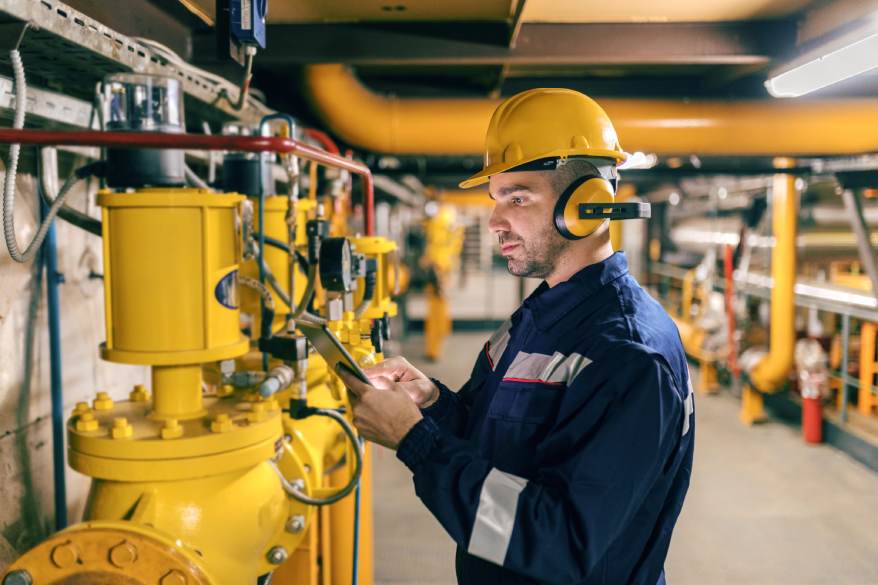
Noise control in industrial environments is more than compliance. It is a direct investment in worker safety, efficiency, and overall productivity. As factories, plants, and warehouses grow more advanced, the sound produced by heavy machinery, fans, pumps, and production systems can still reach harmful levels. When unmanaged, these conditions create health risks, disrupt communication, and reduce output.
At Sound Management Group, we understand that industrial noise control strategies require a balanced approach that accounts for acoustics, architecture, and workflow. By applying proven techniques backed by decades of expertise, we help businesses reduce harmful exposure without sacrificing efficiency.
In this article, we will explore seven effective methods of industrial noise control that deliver measurable improvements to both the working environment and operational performance.
Understanding the Challenges of Industrial Noise
Before discussing solutions, it is important to understand why industrial noise continues to be one of the most persistent challenges in manufacturing and production. Many processes involve high levels of energy transfer from motors, conveyors, pumps, fans, compressors, and pneumatic systems. Each produces mechanical vibrations or air turbulence that result in loud, sustained sound which often spreads across large open spaces.
Unlike occasional bursts of noise, the continuous and overlapping nature of industrial sound creates an environment where exposure builds over time. Even moderate levels can cause long-term issues when workers are exposed for full shifts, five or six days a week. Noise is not always uniform either. It can vary across different areas of a facility, meaning some employees face more extreme risks depending on their role or location.
The human impact is serious. Constant exposure leads to permanent hearing loss, stress, and fatigue. High noise levels also reduce concentration, increase reaction times, and contribute to mistakes on the floor. Workers often struggle to communicate over the noise, making it harder to hear safety instructions, equipment alarms, or emergency signals. This increases the likelihood of accidents, particularly in environments with heavy machinery or moving vehicles.
From a business perspective, unmanaged noise affects productivity and workforce stability. Employees who experience discomfort or health problems linked to noise are more likely to miss work, file claims, or leave their roles. Recruitment and retention then become bigger challenges, especially in competitive industries where safe and comfortable conditions are valued.
Regulatory compliance is another critical factor. Organizations such as OSHA in the United States set clear standards for workplace exposure. Non-compliance may result in fines, legal actions, or mandatory shutdowns until conditions are corrected. These consequences go beyond financial costs and can damage a company’s reputation with clients, partners, and employees.
Noise control in industrial environments therefore serves dual purposes. It protects the health and safety of people who keep operations running, while also securing the long-term stability and resilience of the business. Effective solutions not only lower sound levels but also create workplaces where efficiency, communication, and compliance can thrive.
Vibration Damping
Much of the noise in industrial plants comes not directly from machines but from the vibrations they create. When machinery runs at high speeds or under heavy loads, vibrations naturally occur and travel through structural parts of the equipment. Thin panels, tanks, or conveyor housings often act like amplifiers, radiating sound across the workspace and making overall noise levels worse.
Vibration damping addresses this issue by targeting the source of the sound before it spreads into the environment. The principle is simple: reduce vibration and you reduce noise. Specialized damping materials, such as viscoelastic compounds or composite sheets, are attached to vibrating surfaces. These layers convert vibrational energy into small amounts of heat that are harmless and unnoticed. By interrupting the transfer of vibration, they stop the panels or housings from acting like loudspeakers.
Constrained layer damping systems add even more control. These systems sandwich a viscoelastic material between two rigid surfaces. When vibrations reach the treated surface, the damping layer deforms, dissipating energy efficiently. The result is significant noise reduction without adding excessive weight or bulk to the equipment.
This approach is particularly effective on sheet metal guards, hoppers, ducts, and chutes. These components are common in plants and often contribute to excessive noise when left untreated. With damping, companies gain acoustic relief while also protecting their equipment. Reducing vibration not only lowers sound levels but also minimizes wear and tear caused by resonance. Less stress on components means longer service life and fewer unexpected breakdowns.
Another advantage is that vibration damping can be applied selectively. Facilities do not need to replace entire machines to achieve results. Instead, targeted application to problem areas produces measurable improvements. This makes it a cost-effective method of industrial noise control, especially for companies looking to upgrade older machinery without major redesigns.
In practice, vibration damping is one of the most versatile strategies available. It can be combined with other treatments such as acoustic barriers or absorptive panels for even greater noise reduction. By addressing vibrations at the source, facilities create a foundation for quieter operations while also gaining efficiency and extending the durability of their assets.
Acoustic Barriers and Enclosures
When it is not possible to address noise at the source, the next step is containment. Acoustic barriers and enclosures prevent sound from spreading throughout a facility. Properly engineered walls, panels, and partial enclosures can reduce levels significantly.
Unlike simple partitions, acoustic barriers are made from sound absorbing and sound blocking materials designed for industrial intensity. They can be built as permanent structures or modular solutions that adapt to layout changes. Enclosures around pumps, compressors, or fans allow operations to continue without spreading noise into occupied spaces.
An important consideration is ventilation. Enclosures must allow airflow for cooling while still maintaining acoustic performance. This balance requires precise design, which is why our team integrates airflow engineering into every installation.
Fan and Ventilation System Optimization
Fans are essential to industrial facilities, yet they are also among the loudest components. High-speed blades create turbulence, which translates directly into noise. In some cases, the choice of fan design alone makes a major difference. Backward curved blades, for example, often perform more quietly than forward curved designs.
Another approach is aerodynamic retrofitting. By reshaping housings, adjusting clearances, or adding silencers to ducts, noise can be reduced without lowering airflow. Correct alignment and maintenance also play a role. Worn bearings or misaligned drives generate extra vibration and sound.
A quieter fan system not only benefits worker comfort but also saves energy. Many of the same modifications that cut noise improve overall efficiency. This makes ventilation optimization a prime example of how industrial noise control strategies can pay for themselves.
Pneumatic Exhaust and Nozzle Control
Compressed air systems are notorious for being noisy. Exhausts release high-velocity air that generates broadband sound, while standard nozzles waste energy and amplify turbulence.
The solution is twofold. First, pneumatic exhaust silencers are fitted to outlets, reducing noise while still allowing airflow. Second, low-noise nozzles are used instead of traditional open tubes. These nozzles direct air more efficiently, cutting both sound and energy consumption.
When implemented across multiple lines, the difference is dramatic. Workers no longer need to shout over constant hissing, and energy bills drop due to reduced air waste. In this case, acoustic benefits align directly with financial and operational goals.
Acoustic Absorption and Architectural Design
Noise often bounces across walls, ceilings, and floors, amplifying overall levels. Without treatment, even modest sources can seem overwhelming once echoes fill the space.
Acoustic absorption treatments such as panels, baffles, and ceiling clouds capture sound reflections before they spread. The materials are engineered with porous structures that trap and dissipate sound energy. When installed strategically, they reduce reverberation and create a calmer atmosphere.
Architectural design also plays a role. High ceilings, hard floors, and wide reflective surfaces worsen noise conditions. By adjusting layouts or integrating treatments during upgrades, facilities can create long-lasting improvements.
This technique not only improves decibel levels but also enhances speech clarity, which is vital in environments where instructions must be heard quickly and clearly.
Machinery Maintenance and Retrofitting
Sometimes the most effective solution does not involve new technology but consistent maintenance. Loose parts, worn gears, or unbalanced rotors can turn a relatively quiet machine into a major noise source.
Regular inspection, lubrication, and component replacement keep sound levels stable. Retrofitting older machines with upgraded parts such as quieter electric motors or insulated housings can further reduce output.
This strategy is often overlooked, yet it offers measurable benefits. Maintenance schedules focused on noise as well as performance result in safer environments without major capital investment.
Active Noise Control and Smart Technology
While traditional noise control methods focus on blocking, absorbing, or damping, active systems add an extra layer of precision. These technologies generate anti-noise, sound waves designed to cancel out unwanted frequencies.
Modern advances include IoT powered sensors that monitor levels in real time. Data driven systems adapt instantly to changes, keeping conditions consistent. For facilities with variable production lines, this adaptability is a valuable advantage.
Although active noise control requires higher investment, it provides unmatched performance in environments where traditional methods alone cannot deliver the needed reduction. As technology continues to advance, these systems are expected to become more common in industrial plants.
The Human and Business Impact of Industrial Noise Control
The techniques outlined above all share a common goal: protecting people while supporting productivity. Reduced noise exposure improves worker health, lowers fatigue, and cuts the risk of long-term hearing loss.
From a business perspective, the gains are equally important. A quieter facility is safer, more compliant with regulations, and more attractive to employees. Operational efficiency improves as communication becomes clearer, and in many cases, energy savings help offset project costs.
Noise control in industrial environments is not a luxury. It is a fundamental part of sustainable operations.
Our Role in Industrial Noise Control
At Sound Management Group, we dedicate our work to solving noise problems across commercial and industrial sectors. With more than four decades of experience, we offer full turnkey solutions that include site analysis, custom design, in-house manufacturing, and certified installation.
Our products, from sound masking systems to acoustical treatments and specialty windows, are all manufactured in the USA. By integrating engineering expertise with architectural understanding, we help businesses reduce exposure, meet compliance standards, and create safer, more efficient workplaces.
If you are ready to transform your facility with effective industrial noise control strategies, we invite you to connect with us. Our approach is practical, tested, and tailored to your needs. Together, we can design a solution that not only meets regulations but also improves the quality of every shift.

