
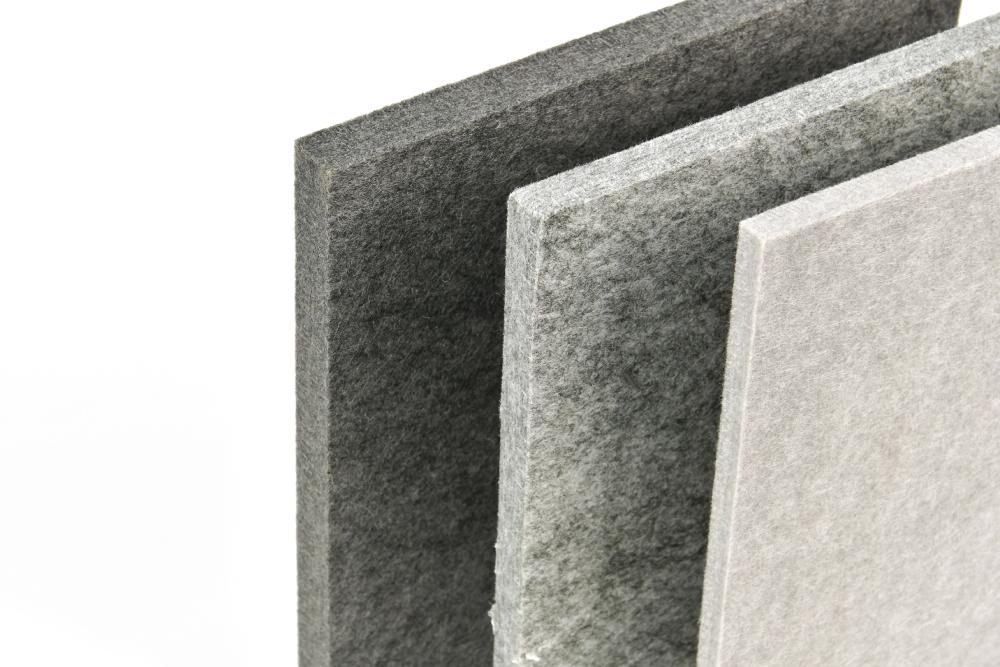
When selecting materials for soundproofing and improving acoustics in office spaces, the options often boil down to fiberglass, foam, and rockwool. Among these choices, fiberglass acoustic panels vs. foam is a debate that often comes up.
Each material has its strengths and weaknesses, depending on the specific needs of the room. While acoustic foam is a popular choice for simple setups, it does not provide the same level of performance as fiberglass or rockwool.
Understanding the differences in performance, cost, and application can help in making the right decision for creating an optimal office environment.
Acoustic Performance and Density
Rockwool (Mineral Wool/Stone Wool)
Rockwool shines as one of the most effective acoustic materials because of its compact makeup. It takes in sound across many frequencies, from high to low. Its capacity to decrease low-frequency sound, like noise from HVAC systems or outside traffic, makes it very good for active office settings.
Rockwool reaches the highest Noise Reduction Coefficient (NRC) scores, often reaching values of $0.95$ or higher. It’s a great fit for areas where controlling sound across different frequencies is important for maintaining a quiet, productive work atmosphere.
Fiberglass
Fiberglass is another excellent choice for acoustic treatment. It offers a strong balance between performance and cost. It is great at reducing mid-to-high frequency noise, such as talking, keyboard tapping, and general office sounds.
Though it has a little less density than Rockwool, which limits its low-frequency absorption, fiberglass still absorbs a lot of sound. With typical NRC scores from $0.70$ to $0.90$, it presents a highly effective option for office areas. Its lighter weight also makes it simpler to handle and fit compared to materials with greater density, like Rockwool.
Acoustic Foam
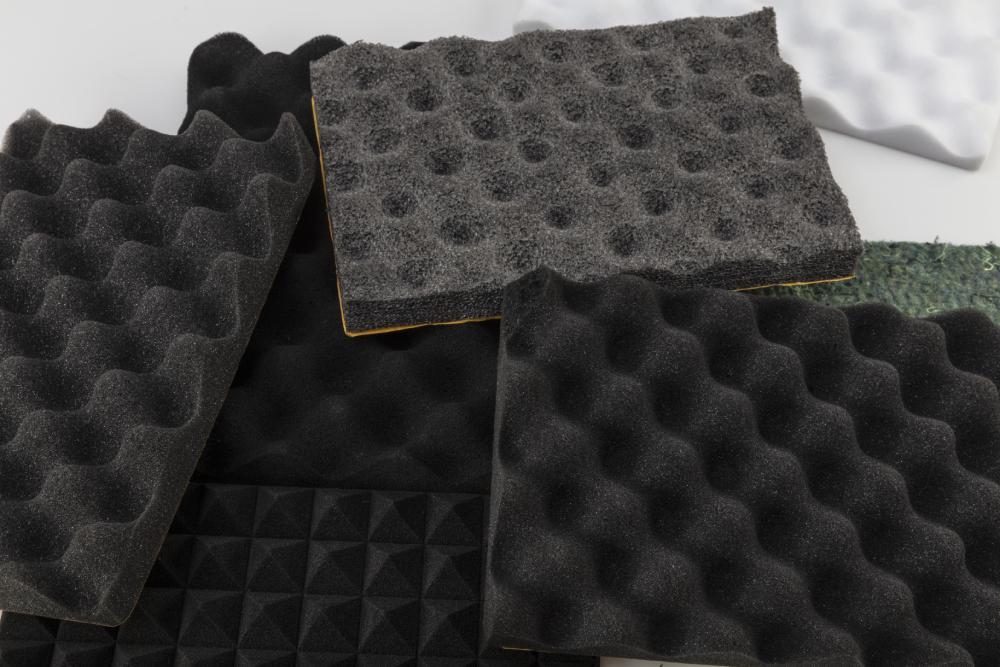
Acoustic foam, while commonly used, is the least effective substance for achieving total sound absorption in office settings. It works well for damping high-frequency sounds, such as sharp voices and typing noise, but it fails to take in mid-range and low-frequency sounds.
Foam's low density means it cannot meet the sound control demands of most professional areas. Unless you use very thick layers or unique shapes, foam does not give the complete acoustic solution needed for office rooms where sound control is vital for focus and comfort.
Fire Safety and Durability
Rockwool
Rockwool naturally resists fire because it is made from rock and slag, making it an excellent choice for fire safety in commercial buildings. It typically achieves a Class A fire rating, the highest level of fire resistance. Its density also adds durability, preventing sagging or slumping over time.
Therefore, Rockwool is a long-lasting option that meets both safety and performance requirements for office spaces. Its combination of fire protection and longevity makes it suitable for environments with strict fire regulations.
Fiberglass
Fiberglass delivers strong fire resistance, with many panels rated Class A. Its rigid structure maintains shape when framed and covered properly.
Fiberglass is lighter than other professional acoustic materials, making it easier to handle and install. It combines effective fire protection with practical installation benefits. These qualities make it a popular choice for commercial spaces where both safety and ease of fitting are important.
Acoustic Foam
Acoustic foam is usually made from polyurethane and often carries a lower Class B fire rating. This lower rating can increase fire risk in office environments that follow strict fire codes.
Fire-resistant foam is available, but it does not reach the same level of protection as Rockwool or fiberglass. Foam also deteriorates over time, becoming fragile and less effective, which reduces its suitability for permanent office installations.
Cost and Recommendation
Acoustic foam has the lowest initial cost, but its limited performance, fire safety concerns, and shorter lifespan make it the least valuable long-term option. Fiberglass costs a bit more but balances cost, performance, and safety. It is the best overall value for most office noise control needs, delivering effective sound absorption at a reasonable price.
Rockwool is the most expensive option, yet its superior performance, particularly for low-frequency noise, makes it worthwhile for spaces where optimal sound control is a priority. For most office settings, fiberglass panels provide the ideal mix of affordability, acoustic performance, and fire safety.
Performance and Safety Summary
Fiberglass Panels
Fiberglass panels perform well in office environments. They absorb sound effectively, particularly mid-to-high frequency noise like voices and typing. Panels typically have a Class A fire rating, offering strong fire protection. Their lightweight and rigid boards simplify installation.
Fiberglass delivers a balanced combination of durability, performance, and cost-effectiveness for most commercial applications. Panels are available in 1-inch and 2-inch thicknesses, with the 2-inch version providing improved low-frequency absorption, suitable for more demanding spaces.
Rockwool (Mineral Wool) Panels
Rockwool provides superior acoustic performance due to its high density, which allows it to absorb sound across a broad frequency range, including low-frequency noise such as HVAC vibrations. It naturally resists fire with a Class A rating, offering strong safety for commercial settings.
Although heavier and more challenging to install than fiberglass, its enhanced acoustic performance justifies the additional effort. Rockwool tends to cost more, but its exceptional sound absorption and fire resistance make it ideal for spaces where optimal acoustic control is a priority.
Acoustic Foam Panels
Acoustic foam panels primarily address high-frequency sound, but they perform poorly with mid-range and low-frequency noise, limiting their effectiveness in office environments. Most foam panels carry a Class B fire rating, which can present safety concerns in commercial spaces.
Foam also degrades over time, losing effectiveness and becoming fragile. That’s why it’s less suitable for long-term installations where consistent acoustic performance is required.
Sound Management Group Delivers Effective Commercial Sound Masking Systems for Offices in Hillsborough, NJ
Achieve optimal acoustic conditions for your workspace right now by partnering with Sound Management Group. We bring four decades of experience and offer the most comprehensive product line available for all your sound control needs.
Our team creates custom-designed acoustic solutions that discreetly mask unwanted noise, significantly improve speech privacy, and enhance the visual quality of your spaces through professional consultation, manufacturing, and complete turnkey installation.
We offer the best sound masking systems for noise control in offices by using systems like Sound Shadow Sound Masking and acoustical treatments such as Eco Absorb and Sound Delete. We manage the entire solution, which includes site surveys, custom design, manufacturing, product delivery, and full installation across the country.
Contact us today to start your project.

