
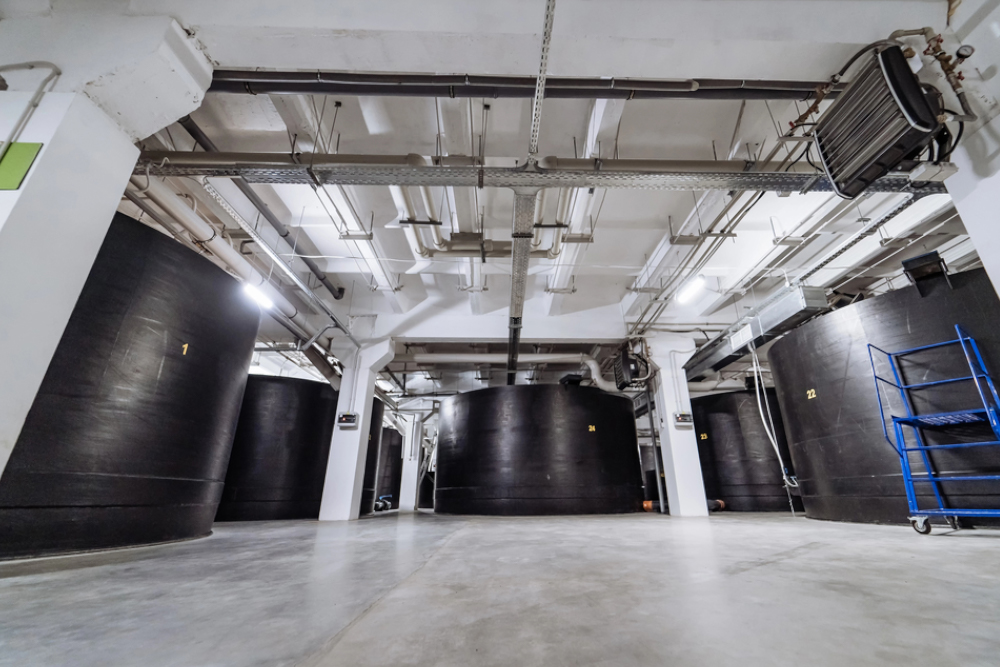
Warehouse acoustics behave differently from office or retail spaces. High ceilings, hard surfaces, and open layouts allow sound to reflect and linger longer than it should. Over time, that excess noise interferes with communication, increases fatigue, and creates compliance challenges related to worker exposure limits.
Addressing these conditions early changes how the space feels and how people work inside it. Sound Management Group brings decades of hands-on experience in industrial acoustics and soundproofing warehouses, working in active facilities that cannot pause operations to address noise issues.
Soundproof Warehouse Design Begins with Sound Behavior
Before any product selection or installation takes place, understanding how sound moves through a warehouse matters more than anything else. Sound energy travels through air and structure, reflecting off walls, ceilings, floors, and equipment. Large volumes amplify these reflections and create reverberation that stacks noise on top of noise.
Three common sound paths dominate warehouse environments:
- Airborne noise from machinery, alarms, voices, and ventilation systems
- Structure-borne vibration moving through steel framing, floors, and building connections
- Reflected sound bouncing off concrete, metal, and glass surfaces
Ignoring one path limits the strategy's success. Effective warehouse soundproofing looks at the space as a complete acoustic system rather than a collection of isolated problems.
Why Industrial Noise Becomes a Business Problem
Noise rarely announces itself as a major issue on day one. It builds gradually as equipment ages, operations expand, and layouts change. Over time, increased sound levels reduce speech intelligibility, slow task completion, and increase stress across the floor.
Industrial settings also face regulatory pressure related to occupational noise exposure. Prolonged exposure increases the risk of hearing damage and fatigue, which affects accuracy and reaction time. These issues affect productivity and safety, making noise control a practical decision rather than a comfort upgrade.
Warehouses that address acoustics early gain flexibility as operations grow. Facilities that delay often face more complex retrofits that disrupt workflows and incur higher long-term costs.
Industrial Sound Proofing Methods that Work Together
Industrial soundproofing succeeds when multiple techniques operate in coordination. No single material or product handles every noise challenge on its own. The goal is to reduce noise at the source, limit transmission, and control reflections throughout the space.
- Absorption Where Sound Builds Up
Sound-absorptive materials reduce reverberation and prevent noise from lingering. Wall-mounted panels, ceiling baffles, and overhead clouds capture sound energy before it reflects into work zones. These treatments work exceptionally well in high-bay spaces where sound accumulates above equipment and workstations.
Placement matters just as much as material selection. Panels installed at proper heights and spacing outperform random coverage every time.
- Isolation Around Noisy Equipment
Equipment enclosures and barrier systems contain noise at its origin. These systems surround compressors, pumps, conveyors, and mechanical units without restricting access or airflow.
Isolation helps prevent noise from spreading across the facility and reduces vibration transfer into the structure. HVAC silencers and lined duct systems help control mechanical noise that often goes unnoticed, yet plays a significant role in overall background sound levels.
- Vibration Control Through Structure
Vibration travels efficiently through steel framing and concrete slabs. Isolation mounts, pads, and decoupling methods interrupt that path and reduce structure-borne noise. These measures protect adjacent areas such as offices, control rooms, and break spaces from low-frequency rumble.
- Layout Decisions that Reduce Noise Naturally
Warehouse layout influences acoustics more than most teams expect. Smart planning reduces noise before materials even enter the picture.
- Zoning with Purpose
Separating high-noise operations from quieter tasks limits sound spread. Machinery, packaging lines, and loading zones work best when positioned away from offices and administrative spaces. Physical distance remains one of the most effective noise control tools.
- Equipment Orientation Matters
Placing equipment away from corners and reflective walls reduces amplification caused by sound trapping. Small adjustments during layout planning prevent larger problems later.
- Buffer Zones that Pull Double Duty
Storage racks, inventory zones, and low-activity areas absorb and block sound when placed strategically. These zones reduce direct sound paths while serving operational needs.
- Traffic Flow Control
Clear forklift routes reduce congestion, sudden stops, and unnecessary engine noise. Thoughtful circulation design lowers background noise without affecting productivity.
Materials that Perform in Industrial Environments
Not all soundproofing materials hold up under warehouse conditions. Durability matters just as much as acoustic performance.
- Dense barriers block sound transmission and contain high-output noise
- Absorptive panels reduce echo and control reflected sound
- Curtains and modular systems offer flexible solutions for changing layouts
- Eco-friendly materials such as recycled PET panels absorb sound while aligning with sustainability goals
Material selection works best when paired with custom fabrication. Standard sizes rarely fit complex industrial layouts without compromise.
Facilities seeking proven solutions often rely on integrated industrial noise control and soundproofing systems specifically for warehouse conditions.
Ceiling Systems and Structural Weak Points
Ceilings play a major role in warehouse acoustics. Exposed decks and metal roofing reflect sound downward, increasing noise at ear level. Overhead absorptive systems can intercept that sound before it returns to the floor.
Office areas within warehouses face a different set of challenges. Drop ceilings often allow sound to pass through plenum spaces, reducing isolation from the main floor. Reinforcing those systems improves separation and limits sound leakage.
Additionally, targeted drop ceiling reinforcement solutions can also strengthen these weak points, preserving access to utilities and mechanical systems.
A Smarter Way to Build a Soundproof Warehouse
Warehouse soundproofing is most effective when planned as part of the operational strategy rather than treated as an afterthought. Addressing sound behavior, layout, materials, and structure together creates environments that feel calmer, safer, and easier to work in.
At Sound Management Group, we apply more than four decades of experience across industrial, commercial, and specialty markets. Our approach combines acoustic surveys, custom design, made-in-the-USA manufacturing, product delivery, and national installation into a single coordinated process.
That integrated model lets us avoid piecemeal fixes that fail to deliver lasting results. Warehouses gain flexibility, employees benefit from healthier sound levels, and operations continue without disruption.
Ready to Reduce Noise Where It Matters Most
A quieter warehouse improves communication, reduces fatigue, and creates space for teams to work at their best. When noise control becomes part of the design, performance follows naturally.
If your facility faces ongoing noise challenges or is planning an expansion, our team can help develop practical solutions made for industrial realities. Contact us and request a tailored assessment through our sales team.

