
The first thing guests notice when they sit down is not always the menu; sometimes it is the noise. A packed dining room should feel energetic and social, but too much noise can quickly change the mood. Conversations may turn into a strain, laughter competes with music, and servers repeat themselves more than they should.
Noise issues rarely come from one source. Hard ceilings, open layouts, reflective materials, and busy service periods all play a role. Sound rises, spreads, and returns amplified when nothing is there to manage it. Acoustic ceiling panels for restaurants have become one of the most effective tools for enhancing the dining experience.
At Sound Management Group, we have seen how thoughtful acoustic design changes the way restaurants operate and how guests respond. When sound is controlled overhead, everything below feels more enjoyable and easier to manage.
Acoustic Ceiling Panels for Restaurants and the Noise Problem
Noise complaints remain one of the top reasons guests hesitate to return to a restaurant. Research consistently shows that diners rank acoustic comfort alongside food quality and service, which places sound control firmly in the revenue conversation rather than the maintenance category.
Most dining rooms are designed to have hard surfaces. Glass, tile, concrete, metal, and exposed ceilings reflect sound rather than absorb it. Voices bounce around the room, then collide with music, kitchen noise, and bar activity. Once sound reaches a certain level, speech intelligibility drops, and people instinctively speak louder. This creates a cocktail effect, where noise feeds on itself.
Ceiling treatments interrupt that cycle at its source. Absorptive panels reduce reverberation and help keep sound from building overhead before it spreads back into the seating area.
Why Ceiling Height and Layout Matter
- Sound Rises Before It Returns
Sound energy naturally travels upward before reflecting back down. High ceilings amplify this effect, especially in open-plan restaurants where walls offer little interruption. Treating the ceiling allows sound to dissipate rather than rebound.
- Open Spaces Multiply Noise
Modern restaurant design favors open kitchens, bar-forward layouts, and flexible seating. These features look great, though they allow noise to travel freely. Ceiling panels help define acoustic zones without adding physical barriers.
- Materials Shape the Experience
Concrete decks and exposed ductwork reflect sound aggressively. Adding absorption overhead balances the surfaces without obscuring the architectural elements that define the space.
Guest Experience Improves When Sound Settles
Noise does more than irritate guests. It influences how food tastes, how long people stay, and how they remember the experience later. Studies show that diners associate excessive noise with lower quality, even when meals meet expectations.
Restaurants that control sound see benefits such as:
- Longer table times without pressure
- Easier conversation without raised voices
- Improved perception of food and service
- Higher likelihood of repeat visits
Online booking platforms have begun factoring acoustics into filters and reviews, making sound control part of digital reputation management.
Staff Performance and Health Are on the Line
- Communication Breakdowns
Servers and kitchen staff rely on quick, accurate communication. High noise levels increase errors, slow service, and raise stress during busy shifts.
- Fatigue Adds Up
Long-term exposure to loud environments contributes to headaches, sleep disruption, and overall fatigue. These issues affect morale and retention, especially in high-turnover hospitality roles.
- Productivity Takes a Hit
Noise-related distractions reduce focus and efficiency. Restaurants that manage sound often see smoother service flow and fewer preventable mistakes.
- Blending Ceiling Panels with Other Acoustic Tools
Ceiling treatments deliver the best results when they work in concert with wall absorption and background sound control. No single product solves every acoustic challenge, especially in complex dining environments.
In rare instances in spaces where speech privacy or exterior noise becomes an issue, restaurant sound masking systems introduce controlled ambient sound that keeps conversations comfortable without distraction.
Design Freedom Without Visual Compromise
- Panels that Work with the Space
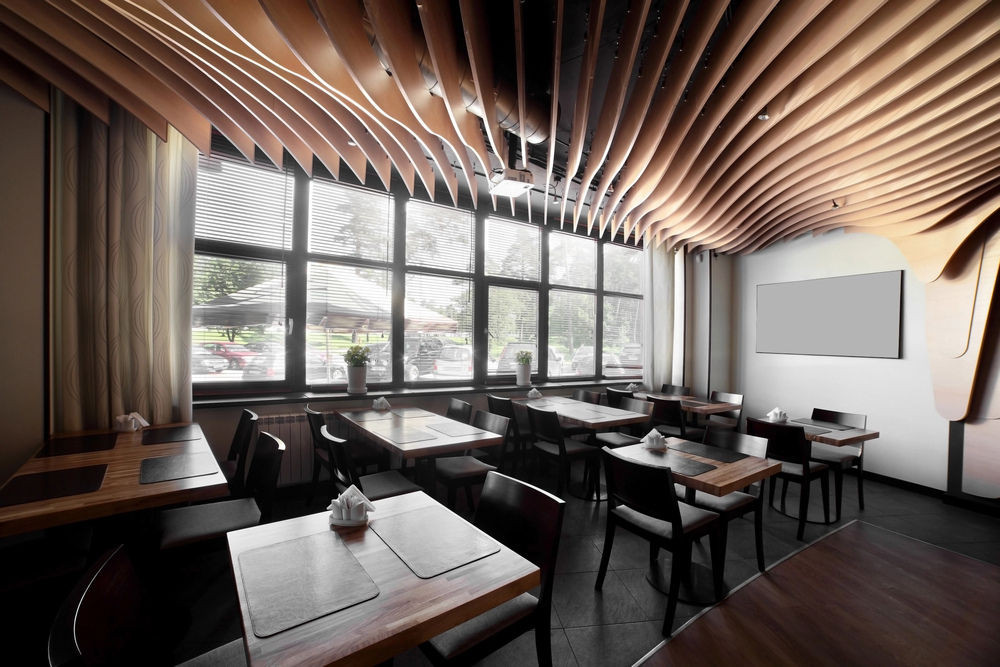
Modern ceiling panels come in a range of shapes and configurations. Floating clouds, linear elements, and suspended forms integrate easily with lighting and mechanical systems.
- Aesthetic Choices Matter
Color, texture, and print options allow panels to blend in or stand out. Restaurants maintain their visual language while gaining acoustic control.
- Flexibility for Future Changes
Site built ceiling systems adapt to layout updates or brand refreshes without requiring a full redesign.
When Sound Works, Everything Else Shines
Restaurants thrive when guests feel comfortable lingering and staff communicate easily. Thoughtful ceiling treatments reduce noise without flattening the atmosphere or hiding architectural character. The dining room feels energetic, conversations flow naturally, and the space works as intended.
At Sound Management Group, we help restaurants shape sound as intentionally as menus and interiors. When acoustics fade into the background, the experience moves forward.
Ready to improve how your restaurant sounds and feels? Get in touch and discover tailored solutions with our team.

