
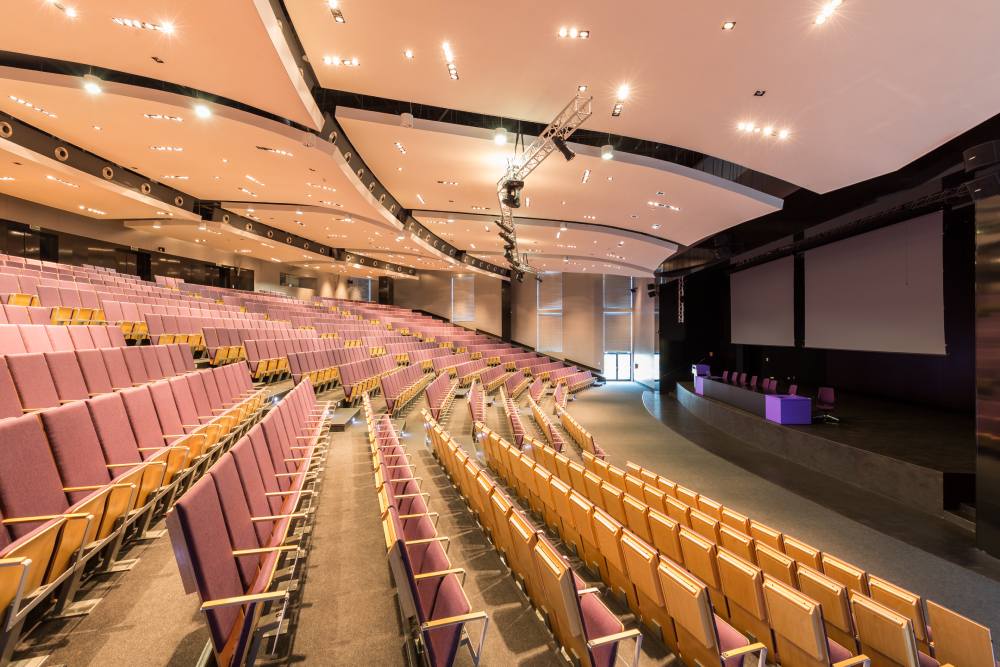
Improving auditorium acoustics is not a cosmetic upgrade; it directly shapes how audiences experience speech, music, and live events. When sound lacks clarity or control, even the most compelling performance loses impact.
Facility managers often begin looking into professional acoustical design and consultation after complaints about echo, uneven volume, or persistent background noise. Many venues also evaluate sound masking products when adjacent spaces interfere with presentations or rehearsals.
Those tasked with decision-making ultimately look for reliable, sound management solutions that solve multiple acoustic problems without compromising architectural intent or operational schedules.
Auditoriums present a challenging combination of scale, reflective materials, and technical requirements. Large seating sections, elevated ceilings, and hard finishes such as concrete, wood, and glass extend reverberation time. Some reverberation enhances musical depth. Excessive reflection, however, blurs speech and reduces intelligibility.
In educational institutions, corporate conference centers, performing arts venues, and houses of worship, this imbalance leads to listener fatigue and frustration. Strong auditorium acoustics create a more engaging and comfortable experience for every audience.
The distinction between sound amplification and acoustic correction is often misunderstood. Audio systems project sound into a space. They do not change how the room responds. When architecture generates distortion, architectural solutions are required to correct it. Increasing volume typically intensifies the problem by amplifying reflections rather than resolving them.
Identifying the Root Causes of Poor Performance
An effective improvement strategy begins with careful diagnosis. Common indicators include unclear dialogue, inconsistent sound levels between front and rear seating, flutter echoes between parallel walls, and elevated background noise during quiet presentations. Performers may struggle with timing when reflections return with a slight delay. Audience members may strain to follow spoken content.
Mechanical equipment, exterior traffic, and corridor activity can further degrade performance. In multipurpose facilities, rehearsals or events in adjacent rooms may intrude into the primary auditorium. Overlapping noise sources require structured isolation planning instead of surface-level adjustments.
Each building has distinct geometry, materials, and occupancy patterns. A one-size-fits-all solution rarely produces consistent results. Accurate measurement of reverberation time, background noise, and frequency response forms the foundation for effective design decisions and improved auditorium acoustics.
Balancing Reverberation and Clarity
The objective in most auditoriums is not to eliminate reverberation entirely. A room that absorbs too much energy can sound flat and lifeless. Instead, the goal is balanced control that preserves warmth while sharpening articulation.
Strategically placed absorptive treatments reduce excessive reflection across targeted frequency ranges. Placement must consider sightlines, architectural features, and speaker coverage patterns. Random installation can create uneven acoustic zones that leave some seating areas untreated.
Custom-manufactured acoustical panels allow designers to coordinate finishes with existing décor. Fabric selections, dimensional options, and graphic applications can go with branding or institutional identity. When executed correctly, acoustic improvements appear intentional rather than retrofitted.
Managing Sound Transmission Between Spaces
Isolation is often overlooked in auditorium planning. Even when internal reverberation is controlled, sound may leak through walls, ceilings, or window systems. For venues located near busy streets or within shared facilities, exterior and structural noise can intrude during performances.
Isolation strategies may include reinforced partitions, upgraded glazing systems, vibration control methods, and sealing of structural gaps. Dealing with these pathways requires technical knowledge of building assemblies and construction standards.
Superficial fixes rarely deliver meaningful reduction. When rehearsal rooms, backstage areas, or adjacent classrooms operate simultaneously, isolation becomes even more important. Proper planning prevents one activity from disrupting another and protects event quality.
The Relevance of Sound Masking in Large Facilities
In some auditorium environments, particularly within corporate or educational campuses, low-level background noise from surrounding offices can distract performers and attendees. Sound masking products introduce controlled ambient sound that reduces the perception of intrusive noise.
Masking must be engineered carefully. Improper calibration can interfere with primary program audio. Careful planning helps adjust masking levels with auditorium objectives rather than competing against them.
Integrating Acoustics With AV Systems
An auditorium’s performance depends on the relationship between architecture and technology. Loudspeaker placement, microphone configuration, and signal processing must be in keeping with the room’s acoustic characteristics. When these systems operate in conflict, clarity suffers.
Coordinated planning between acoustic specialists and AV consultants prevents redundancy and misalignment. Treating the room before or during audio system design avoids costly retrofits later. This collaborative approach protects investment and improves long-term reliability.
Avoiding Common Mistakes
Facilities sometimes install thin foam materials purchased online in an attempt to reduce echo. These products often absorb limited frequency ranges and degrade quickly in high-traffic environments. Visual clutter may increase while measurable improvement remains minimal.
Others rely simply on ceiling clouds or decorative banners without analyzing room dynamics. Without precise placement and calculation, such additions rarely achieve balanced results. Large-scale venues require professional engineering.
Guesswork leads to partial improvement followed by further expense to correct missteps.
Planning for Multi-Use Performance Spaces
Modern auditoriums frequently serve diverse functions: keynote presentations, theatrical productions, concerts, training seminars, and community events. Each activity places different demands on the acoustic environment.
A strategic plan considers flexibility. Variable absorption systems, modular treatments, and adaptable layouts can accommodate changing programming needs. Designing for versatility at the outset avoids disruptive modifications in the future.
Growth projections also matter. Expanded seating capacity, additional lighting rigs, or architectural renovations may alter sound behavior. Forward-looking design anticipates these changes rather than reacting to them after performance declines.
Protecting Architectural Integrity
Acoustic treatment should complement the visual statement of the venue. Historic theaters, contemporary lecture halls, and branded corporate spaces each carry a distinct identity. Custom fabrication means that finishes will better meet design goals while achieving performance objectives.
Graphic acoustical systems can incorporate logos, artwork, or thematic imagery. Precision manufacturing allows panels to fit irregular wall contours and ceiling structures. Thoughtful integration reinforces both form and function.
Selecting a Proven Acoustic Partner
Choosing turnkey execution from the right firm is as important as selecting the right products. Experience across commercial and institutional markets demonstrates adaptability to different architectural conditions. National installation capability guarantees consistency for organizations operating multiple venues.
Prospective partners should demonstrate manufacturing expertise, proper licensing, and industry affiliations. Detailed proposals grounded in measurement rather than assumption signal technical credibility.
Decision-makers benefit from working with a provider that controls design, fabrication, and installation under one coordinated structure. This reduces communication gaps and accelerates completion.
Improve Your Auditorium With Expert Solutions
Sound Management Group brings 42 years of experience delivering engineered acoustic systems for commercial and institutional environments. With locations in New Jersey, California, and Louisiana, we execute projects nationwide with disciplined coordination and precision. Our process includes survey, design, custom manufacturing, product delivery, and professional installation.
We manufacture Sound Shadow Sound Masking Systems, Eco Absorb Acoustical Treatments, Sound Delete Acoustical Treatments, Soundtite Windows, and Acoustic Impressions Digital Prints in the United States.
Our team collaborates with architects, facility directors, and AV consultants to transform auditoriums into controlled, high-performance environments that support clarity and audience engagement.
If you have questions about improving your auditorium environment or would like to check out professional acoustic solutions, please reach out to Sound Management Group today.

