
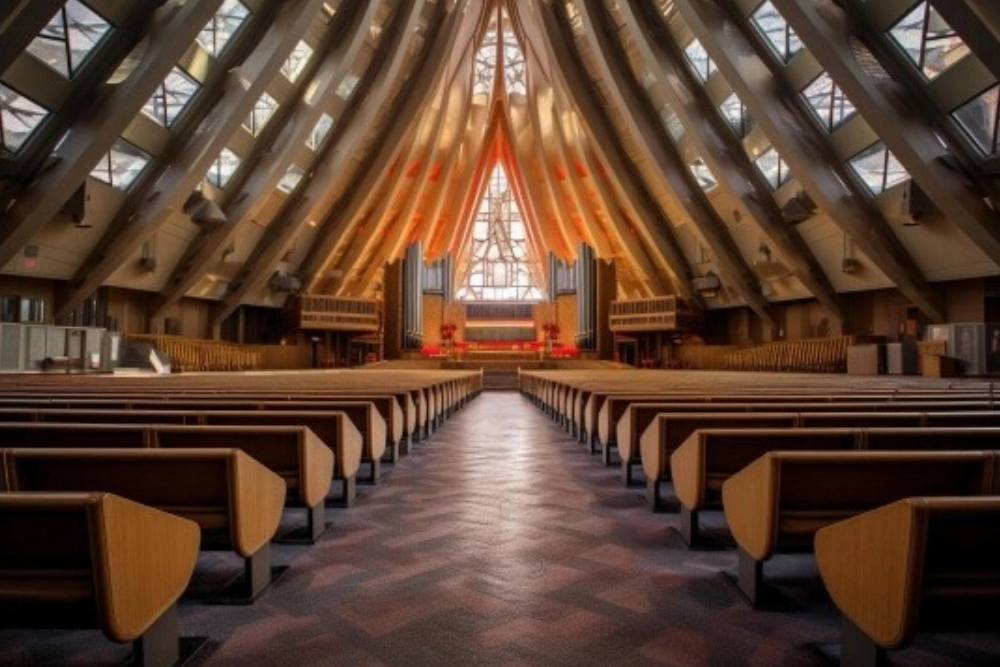
Church soundproofing plays a critical role in speech clarity, musical quality, and the overall worship experience. In expansive sanctuaries and multi-use ministry spaces, sound can either enrich a service or introduce ongoing distractions that diminish engagement.
Some faith-based organizations begin researching church acoustic panels and soundproofing after noticing echo, excessive reverberation, or noise transfer between rooms. Others want professional acoustical design and consultation when planning new construction or renovating an aging sanctuary.
Decision-makers frequently look for reliable, sound management solutions that solve multiple problems at once without compromising aesthetics or architectural character.
This guide explains what commercial church leaders need to consider before investing in an acoustic upgrade and why a fully engineered approach delivers better long-term results than piecemeal fixes.
Why Churches Present Unique Acoustic Challenges
Church buildings differ significantly from standard commercial facilities due to their scale and architectural design. Sanctuaries commonly feature vaulted ceilings, expansive wall surfaces, and reflective finishes that extend reverberation time. Materials such as stone, tile, glass, and finished wood intensify sound reflections throughout the space.
Extended reverberation reduces speech definition and causes consonants to blend together during sermons or announcements. Congregants may struggle to follow spoken messages, while musicians encounter timing challenges as reflections return fractions of a second later.
Open foyers, classrooms, and fellowship halls add further complexity when sound migrates between ministry areas. Youth rehearsals, counseling sessions, and community gatherings can interfere with one another without proper isolation planning. Mechanical systems, exterior traffic, and nearby activity contribute additional background noise that requires structured intervention rather than decorative surface treatments.
Soundproofing Versus Sound Control
Church leaders often use the term soundproofing broadly, yet two separate objectives require evaluation: internal sound control and structural isolation. Internal control addresses reverberation and reflection within the sanctuary, with the primary goal of improving clarity and musical balance. Achieving this outcome requires precisely positioned absorptive materials that manage sound energy without removing warmth.
Isolation focuses on limiting sound transmission between rooms or from outside sources into the worship space. Structural enhancements, specialized glazing systems, and engineered assemblies reduce airborne and impact noise effectively.
A comprehensive church soundproofing strategy considers both internal control and isolation together, since treating only one aspect can leave persistent acoustic frustrations unresolved.
Common Symptoms That Signal a Need for Professional Intervention
Church administrators typically notice recurring issues before contacting an acoustic firm:
- Sermons sound muddy or indistinct in the rear seating sections.
- Choir harmonies blend into an indistinguishable wash of sound.
- Feedback occurs despite equipment adjustments.
- Fellowship hall events interrupt adjacent ministry rooms.
- Outside traffic or community noise penetrates the sanctuary.
These symptoms rarely resolve through speaker repositioning alone. Audio equipment amplifies sound; it does not correct the room itself. When architecture drives the problem, architectural solutions are required.
Why DIY Fixes Fall Short in Church Environments
Some congregations install foam products purchased online or hang decorative fabrics along sanctuary walls. These measures may reduce limited surface reflection, yet they rarely resolve the underlying acoustic imbalance. Incorrect material selection can over-absorb certain frequencies while leaving others uncontrolled, which creates uneven sound zones across seating areas.
Historic or architecturally significant sanctuaries also risk visual disruption when panels are placed without strategic planning. Isolation challenges demand more than surface applications, since exterior noise entering through windows or structural gaps requires engineered assemblies for meaningful reduction.
In larger churches with multimedia systems and substantial seating capacity, trial-and-error approaches increase costs and prolong disruption.
What a Strategic Church Soundproofing Plan Includes
A successful approach begins with a detailed site survey. Measurements evaluate reverberation time, background noise levels, room geometry, and construction materials. This data helps devise a customized design that is in keeping with worship style, musical programming, and architectural constraints.
Targeted Absorption
Absorptive treatments reduce excessive reflections without eliminating natural resonance. The objective is balanced clarity, not a lifeless room. Custom-manufactured panels can match interior finishes, incorporate branding elements, or display inspirational imagery.
Controlled Reflection Management
Strategic placement preserves desirable sound energy while minimizing distortion. Positioning is determined by acoustic modeling, not guesswork. This helps make certain that the spoken word remains intelligible from front pews to balcony seating.
Sound Isolation Systems
When outside noise or room-to-room transfer is a concern, structural upgrades may be required. Specialized window systems, reinforced partitions, and vibration control measures can reduce intrusion.
Design Coordination
Audio system performance depends on the room’s behavior. Acoustic planning should occur in coordination with AV teams to prevent conflict between loudspeaker design and architectural treatment. An integrated process avoids redundancy and maximizes return on investment.
The Importance of Aesthetics in Worship Spaces
Church environments are sacred and symbolic. Acoustic upgrades must respect visual identity. Panels, treatments, and window systems should blend smoothly into the design.
Custom fabrication allows finishes to complement wood tones, stained glass, or contemporary minimalist interiors. Graphic applications can incorporate scriptural themes or ministry branding. The right solution boosts both sound and appearance, reinforcing the atmosphere congregations expect.
Planning for Growth and Multi-Use Ministry
Modern churches often host concerts, conferences, weddings, and outreach events in addition to weekly services.
Fellowship halls frequently convert into classrooms, banquet spaces, or rehearsal areas depending on ministry demands. Acoustic treatment must accommodate these transitions without sacrificing clarity or musical expression.
Flexible systems support spoken word during sermons while adapting to dynamic music programming and multimedia presentations. Isolation between zones protects concurrent activities. This allows ministry functions to operate simultaneously without interference.
Future seating expansions or programming growth can alter sound behavior, so forward-looking church soundproofing design anticipates these changes early.
Why Turnkey Execution Matters
Complex projects require coordination between survey teams, designers, manufacturers, and installers. Fragmented responsibility leads to delays and inconsistent results.
A turnkey model centralizes accountability. From initial evaluation through final installation, each phase lines up with a unified objective. Custom manufacturing helps assure product compatibility.
Professional installation guarantees correct placement and structural integrity. This structured process minimizes disruption to worship schedules and reduces unforeseen costs.
National Capability With Local Attention
Large ministry organizations and multi-campus churches often operate across state lines. Consistency in acoustic performance across locations strengthens brand identity and congregational experience.
National installation capability allows standardized design principles while adapting to each building’s layout. Local code compliance and licensing requirements must also be met during construction or renovation. Experience across diverse vertical markets supports effective problem-solving in complex facilities.
Elevating Worship Through Professional Expertise
Sound Management Group specializes in engineered solutions for complex commercial environments, including churches of all sizes. With more than 42 years of experience and locations in New Jersey, California, and Louisiana, we bring national reach with disciplined execution.
Our combined approach includes survey, design, custom manufacturing, product delivery, and installation under one coordinated structure.
We manufacture Sound Shadow Sound Masking Systems, Eco Absorb Acoustical Treatments, Sound Delete Acoustical Treatments, Soundtite Windows, and Acoustic Impressions Digital Prints in the United States.
Our team works directly with church leadership, architects, and AV consultants to create spaces that deliver clarity without sacrificing beauty. Every project reflects precision, accountability, and respect for the worship environment.
If you have any questions about improving your church sound environment or want to explore professional church acoustic solutions, please reach out to us today at Sound Management Group.

