
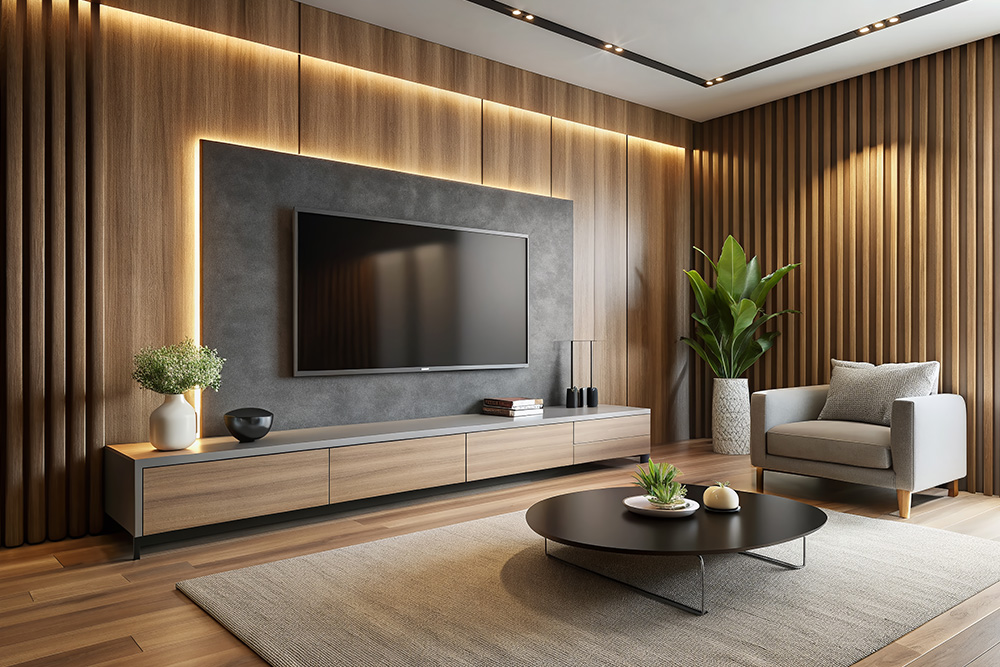
Sound quality shapes how entertainment spaces feel long before visuals take over. In TV rooms, media lounges, and broadcast environments, wall reflections blur dialogue and weaken impact. Thoughtful acoustic panel TV wall ideas address this issue at the surface level, where sound first interacts with the room.
Acoustic panel design influences clarity, comfort, and immersion without changing layout or technology. In professional environments, sound masking systems for TV and entertainment buildings often complement panel treatments to manage noise consistently across viewing zones.
Why TV Walls Shape the Sound Experience
TV walls act as primary reflection points. Sound from speakers travels forward, strikes the wall surface, and returns into the room. Hard finishes amplify this effect. As reflections build, speech loses definition and soundtracks feel harsh.
Acoustic panel TV wall treatments absorb these reflections and shorten sound decay. This change allows dialogue to remain clear at lower volumes. Viewers experience less fatigue during long sessions. In shared entertainment spaces, controlled reflections reduce spill into nearby areas.
Blending Acoustic Panel Design with Visual Appeal
Entertainment spaces demand visual balance as much as acoustic control. Panels behind TVs must align with screen size, furniture, and lighting. Acoustic panel design supports this balance by offering textures, colors, and layouts that frame screens rather than distract from them.
Vertical wood slat panels[1] elongate walls and complement large displays. Horizontal arrangements widen the visual field in smaller rooms. Modular designs allow symmetry around screens and speakers. This integration keeps the TV wall intentional rather than technical.
Using Depth and Texture to Control Reflections
Flat surfaces reflect sound evenly. Textured acoustic panels disrupt that reflection path. Depth variations scatter sound energy while absorption materials reduce intensity. This combination produces smoother sound across seating areas.
Entertainment rooms with layered panel depths experience more even audio. Viewers seated off center hear balanced sound rather than harsh reflections. Textured designs also add visual interest without heavy ornamentation.
Managing Low and Mid Frequency Reflections
TV walls handle a wide frequency range. Speech clarity relies on mid frequencies, while music and effects introduce lower tones. Acoustic panels focus primarily on mid and high frequencies. Pairing them with complementary treatments balances the full range.
In larger entertainment spaces, panels extend beyond the screen area to capture reflections from side speakers. This approach improves spatial accuracy and reduces muddiness during complex audio scenes.
Acoustic Panels in Multi-Use Entertainment Rooms
Many spaces serve multiple purposes. A room may host viewing, meetings, or live broadcasts. Acoustic panel TV wall ideas adapt to these shifts by controlling reflections without isolating the room acoustically.
Panels reduce echo during conversation and maintain clarity during playback. This flexibility benefits studios, media offices, and corporate presentation spaces. Panels remain passive yet effective regardless of room use.
Why Professional Planning Matters for TV Wall Panels
Panel placement influences performance as much as material choice. Improper spacing leaves reflection paths active. Over treatment removes energy and dull sound. Professional design evaluates room dimensions, speaker placement, and viewing distance before final layouts.
This planning avoids trial and error. Entertainment environments achieve reliable results faster and maintain visual coherence. Panel systems integrate with lighting, wiring, and mounting hardware cleanly.
Soundscaping Beyond the TV Wall
While TV walls anchor sound control, surrounding surfaces shape the overall experience. Side walls, ceilings, and open areas contribute reflections that panels alone cannot address.
Through absorbing sound and reverberation reduction strategies, entertainment spaces gain consistency. Panels work alongside ceiling treatments and ambient control methods to maintain balance across the room.
Integrating Panels with Broader Acoustic Systems
Acoustic panel TV walls work best as part of a system. In professional environments, panels integrate with sound masking products to stabilize background noise levels. This layered approach improves clarity without demanding higher volume.
Sound Management Group designs these systems holistically. Panels, masking, and surface treatments align with how the space functions daily.
Designing TV Walls That Age Well
Entertainment spaces evolve. Screens change size. Seating layouts shift. Acoustic panel design accounts for this by using modular layouts that adapt over time. Panels maintain performance even as equipment updates.
Durable materials and clean layouts protect investment value. TV walls remain functional and visually relevant across years of use.
A Thoughtful Finish for Entertainment Spaces
At Sound Management Group, we design acoustic panel TV walls that balance sound control and visual intent. We study how sound interacts with screens, seating, and surfaces, then tailor panel systems to match each environment. Our solutions integrate with sound masking products and broader acoustic strategies to create consistent experiences across entertainment spaces.
To start a conversation about your entertainment space goals, contact us to speak with our team.

