
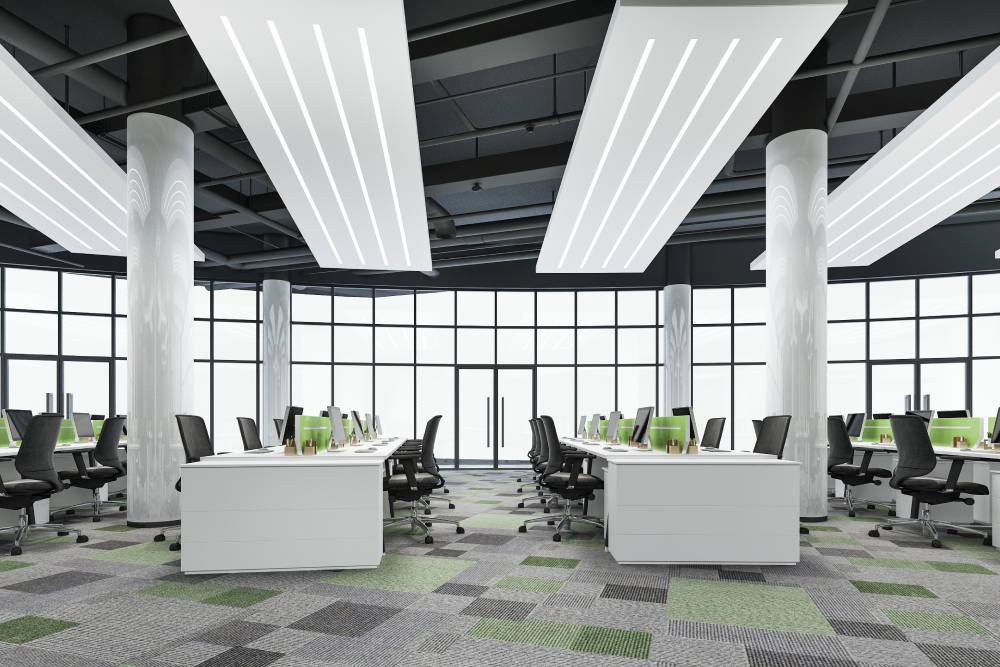
Office noise can interrupt meetings, reduce focus, and impact productivity across departments. Many facility managers ask, "How much does it cost to soundproof a ceiling in a commercial office setting?" The answer varies based on construction type, noise source, and the level of sound control required.
How Much Does it Cost to Soundproof a Ceiling in Different Office Types?
When determining “How much does it cost to soundproof a ceiling,” the office configuration is a primary consideration.
Open-plan layouts, executive suites, call centers, and medical offices each present distinct acoustic challenges. Ceiling construction, plenum depth, and shared building infrastructure also influence strategy and overall investment.
Sound frequently travels through common ceiling cavities and interconnected ductwork, which increases project complexity in commercial properties. High-rise buildings often demand different isolation techniques than single-story corporate campuses. Costs can range from moderate acoustic improvements to more advanced structural modifications, depending on performance objectives.
Material Costs that Influence Commercial Ceiling Soundproofing
Material selection plays a major role in pricing, especially in professional environments. Standard upgrades might include added drywall layers, isolation clips, insulation, and acoustic sealants. More advanced systems integrate engineered wall and ceiling panels designed for specific sound transmission ratings.
Commercial acoustic treatments may start at a modest per-square-foot cost for absorption, while structural isolation systems require greater investment. Eco-friendly polyester sound absorption panels are frequently chosen for their resilience and refined appearance in office interiors. Custom finishes and fabrication can raise material expenses while strengthening visual consistency.
Labor and Installation Factors in Office Soundproofing Projects
Installation costs depend on accessibility, ceiling height, and whether the workspace remains operational during construction. Many offices schedule after-hours installation, which can influence labor planning and pricing. Integrated lighting, sprinkler systems, and ceiling grids often require coordination among multiple trades.
National installation capabilities are often beneficial for multi-location companies that want consistent standards. Projects that require demolition, reframing, or mechanical adjustments will carry higher labor investment. Professional survey and design planning help reduce unexpected costs during execution.
Absorption versus Isolation — Why the Approach Matters
Not all acoustic improvements involve structural sound blocking. Some offices require absorption treatments to manage echo and speech intelligibility within the room itself. In these cases, wall and ceiling wrap systems or decorative treatments may be more appropriate than full ceiling reconstruction.
Offices affected by sound transmission from upper floors usually require more comprehensive isolation strategies. Structural decoupling, increased mass, and insulated cavities help reduce both airborne and impact noise. The distinction between absorption and isolation plays a direct role in defining scope and total project cost.
Design Integration and Aesthetic Considerations
Corporate environments demand acoustic solutions that align with branding and interior design. Acoustic Impressions® Digital Prints allow treatments to double as visual elements while maintaining performance standards. Eco-friendly polyester sound absorption panels can be customized in color and texture to match office palettes.
In boardrooms and executive suites, discrete ceiling modifications are often preferred. Sound masking systems, such as Sound Shadow® Sound Masking Systems, can complement ceiling treatments by reducing speech distractions.
Budget Planning For Long-Term Office Performance
Expanding organizations may require adaptable systems that accommodate layout changes. Higher-performing assemblies installed early can reduce the need for later retrofits.
Businesses operating across various vertical markets frequently standardize acoustic specifications company-wide. A coordinated process that includes survey, design, custom manufacturing, product delivery, and installation creates predictable performance outcomes. Long-term planning connects acoustic investment with broader operational goals.
How Building Construction Impacts Ceiling Soundproofing Costs
Current building conditions significantly shape ceiling soundproofing expenses. Older commercial properties may have restricted plenum space or outdated framing that complicates upgrades. Newer buildings often allow smoother integration of engineered isolation systems.
Concrete slabs, steel framing, and suspended ceiling grids each demand distinct acoustic strategies. Structural characteristics affect material choice, installation duration, and labor coordination. A thorough site assessment identifies these variables early, so cost projections remain realistic and aligned with expectations.
Making an Informed Investment in Office Sound Control
The cost to soundproof a ceiling in your office depends on performance targets, construction conditions, and the technology selected. Some projects involve simple acoustic enhancements, while others require engineered isolation assemblies.
Working with an experienced commercial acoustics provider allows decision makers to align cost with measurable performance outcomes.
Start Your Office Acoustic Evaluation
At Sound Management Group, we help businesses understand “How much does it cost to soundproof a ceiling?” and design solutions that match operational goals. Contact us and begin a professional acoustic survey tailored to your commercial space.

