
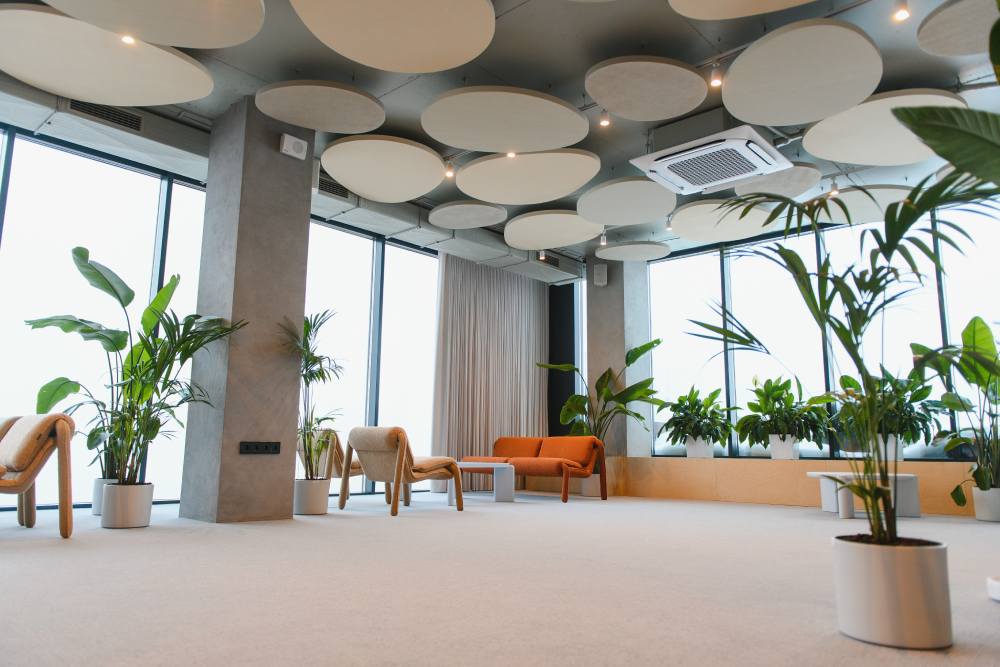
Knowing how to install acoustic panels on a ceiling is imperative to achieve optimal sound control in commercial office environments. Proper ceiling treatment can greatly reduce reverberation, improve speech clarity, and boost overall workplace productivity.
An impressive number of organizations begin this process with acoustical design and consultation to evaluate space requirements and identify problem areas before any installation decisions are made. Professional planning guarantees that solutions meet both performance objectives and aesthetic expectations.
To achieve the best results, businesses rely on professional soundproofing installation rather than attempting a DIY approach. Large-scale commercial projects demand expertise in handling weight-bearing structures, integrating ceiling systems, and complying with building codes.
Selecting custom acoustic panels allows offices to meet specific design criteria while maximizing absorptive performance and visual cohesion. Custom manufacturing makes certain that panels can be fabricated in precise dimensions, customized to ceiling layouts, and finished to complement the overall office design.
Why Ceiling Acoustic Panels Matter
Office ceilings play a major role in workplace acoustics, yet they are frequently overlooked. Hard materials such as exposed concrete, ceiling tiles, or metal decking reflect sound waves. These reflections generate echo and interference that disrupt concentration.
Open-concept layouts intensify these challenges, spreading distractions across multiple work zones. Ceiling acoustic panels address reflection from above and create balanced absorption throughout the space. Improved speech intelligibility and greater acoustic comfort follow when reflection points are treated strategically.
Well-designed ceiling systems integrate seamlessly with lighting fixtures, HVAC components, and sprinkler infrastructure. Panels must be positioned carefully so mechanical systems remain unobstructed while reflection zones receive adequate coverage. A properly engineered installation blends performance with architectural continuity.
Common Misconceptions About Ceiling Acoustics
Some organizations underestimate the complexity involved in ceiling acoustic treatment. Lightweight foam products or decorative tiles are often assumed to deliver substantial sound control. These materials may absorb limited frequencies, yet they rarely address full-spectrum reverberation or reflection patterns.
Improper installation frequently leads to uneven panel distribution, inconsistent spacing, and noncompliance with fire or structural regulations. Inaccurate placement can create acoustic dead zones or leave high-reflection areas untreated. Professional installation eliminates guesswork and preserves performance integrity.
Initial Planning and Assessment
A comprehensive site survey forms the foundation of a successful installation. Professionals measure room dimensions, ceiling height, surface materials, and baseline noise levels. These details determine panel thickness, material selection, and placement strategy.
Acoustic modeling simulates how sound travels within the environment. Reflection points, absorption gaps, and interference from lighting or ventilation systems are identified in advance. Data-driven planning prevents visual clutter and structural complications while maximizing coverage.
Selecting the Right Panels for Ceiling Installation
Custom acoustic panels are available in various core materials and finish options. Fiberglass and mineral wool cores deliver strong absorption across multiple frequency ranges. Fabric coverings can align with corporate color schemes and interior décor.
Graphic systems such as Acoustic Impressions Digital Prints apply imagery to acoustic panels without compromising performance. This approach reinforces brand identity while maintaining high acoustic standards. Precision fabrication also accounts for mounting hardware and structural reinforcement, contributing to durability and long-term stability.
Working With Building Systems
Ceiling panels must coexist with other overhead infrastructure. Lighting, air vents, sprinkler systems, and cable trays can all interfere with acoustic performance if not accounted for during design. Professional installers coordinate with electrical, mechanical, and facility teams to create a smooth integration plan.
This coordination prevents conflicts that could compromise either system’s functionality. Panels are positioned to optimize absorption while maintaining accessibility for maintenance. Proper planning avoids unnecessary modifications and makes for a cohesive installation throughout the office.
Best Methods and Best Practices
Professional installation relies on engineered mounting systems that support panel weight and accommodate ceiling type. Options include suspended grids, direct mount brackets, and tension wire systems. Each method is selected based on ceiling height, structural capacity, and accessibility requirements.
Installers follow a precise layout plan derived from acoustic modeling. Panels are positioned with reflection points, spaced to optimize absorption, and leveled for visual consistency. Gaps, overlaps, or uneven positioning can reduce performance and create aesthetic inconsistencies.
Hardware and fasteners are selected for durability, compliance, and minimal visual intrusion.
Safety and Compliance
Commercial ceiling installations must comply with fire codes, weight-bearing standards, and structural guidelines. Installation teams verify load capacities, anchoring methods, and material ratings before proceeding.
Proper execution reduces the risk of panel failure or structural damage and protects occupants from safety hazards. Long-term accessibility is also considered. Panels are mounted so inspection, cleaning, or replacement can occur without disrupting daily operations.
Maintenance and Longevity
Custom acoustic panels are designed to last for years with minimal upkeep. Professional installation helps to make certain panels remain secure and aligned, preserving both performance and appearance. Regular inspections check for wear, fabric integrity, and hardware stability.
Cleaning recommendations are tailored to materials, typically involving gentle vacuuming or spot cleaning to preserve absorptive properties. Panels can be rotated or replaced without affecting surrounding elements, which will maintain consistent acoustic performance throughout the office lifecycle.
Measuring Success After Installation
After ceiling panels are installed, post-installation testing validates results. Acoustic measurements confirm reverberation reduction, coverage uniformity, and frequency balance. Feedback from employees regarding noise reduction, speech clarity, and overall comfort provides practical confirmation of improvement.
Adjustments, if necessary, are minor and guided by the initial survey data. This structured approach assures a reliable outcome that meets both functional and aesthetic expectations.
The Value of Professional Soundproofing Installation
Attempting to install ceiling panels without expertise exposes organizations to risk, wasted resources, and subpar performance. Professional soundproofing installation delivers predictable results, compliance with regulations, and maximum compatibility with office systems.
It also makes sure that acoustic solutions are in keeping with company branding and interior design goals. By combining custom panel fabrication with expert placement, businesses achieve measurable improvements in clarity, noise control, and employee satisfaction.
An all-inclusive approach considers every factor, from material choice to reflection points, to maximize the value of the investment.
Why Turnkey Services Matter
From initial consultation to final installation, a fully coordinated process protects timelines and budgets. Survey, design, manufacturing, and installation are managed by a single team to maintain accountability. This approach reduces errors, ensures uniformity across multiple office locations, and guarantees that acoustic objectives are fully met.
Facilities benefit from the integration of expertise, high-quality materials, and engineered solutions. The result is a controlled acoustic environment that enhances speech intelligibility, reduces distractions, and supports professional office operations.
Partnering With Sound Management Group
At Sound Management Group, we bring more than 42 years of experience in engineered acoustic solutions for commercial environments. With locations in New Jersey, California, and Louisiana, we deliver coordinated survey, design, custom manufacturing, product delivery, and installation nationwide.
Our custom acoustic panels and professional ceiling installation services allow offices to achieve superior sound control while maintaining aesthetic integrity.
We collaborate with facility managers, architects, and design teams to develop solutions that integrate with every aspect of the office environment.
If you want to improve your workplace acoustics safely and effectively, please contact Sound Management Group today for professional guidance and turnkey ceiling acoustic solutions.

