
Quick Summary
Polyester sound absorbing panels are gaining attention as a safe, clean alternative to traditional fiberglass or foam. They handle echoes well and are easy to install. But how do they stack up on performance, safety, and cost? This guide compares polyester acoustic panels with conventional options and answers the common question is polyester good for soundproofing. We also share practical tips for choosing the right panels for your room.
If you have spent time looking at acoustic treatments, you have probably seen both fiberglass and polyester options. Our eco-friendly polyester sound absorption panels are a popular choice for schools, offices, and home theaters that need clean, effective sound control. But many people still wonder how polyester acoustic panels measure up against traditional materials.
At Sound Management Group, we work with every type of panel, so we can explain the real differences without the marketing fluff.
What Are Traditional Acoustic Panels?
Most traditional acoustic panels use a core of fiberglass or mineral wool. These materials are very good at absorbing sound, especially mid and high frequencies. They are wrapped in fabric to keep the fibers contained and give the panel a finished look.
The downside is that fiberglass can shed tiny particles during installation or if the fabric gets torn. It also has a slight odor that some people find bothersome. Still, fiberglass panels have been the standard for decades because they work well and are often lower in upfront cost.
What Are Polyester Sound Absorbing Panels?
Polyester sound absorbing panels are made from compressed polyester fibers, often recycled from plastic bottles. The fibers are formed into dense boards that trap sound energy and reduce echo. Because they are made from polyester, they need no chemical binders or glues to hold their shape.
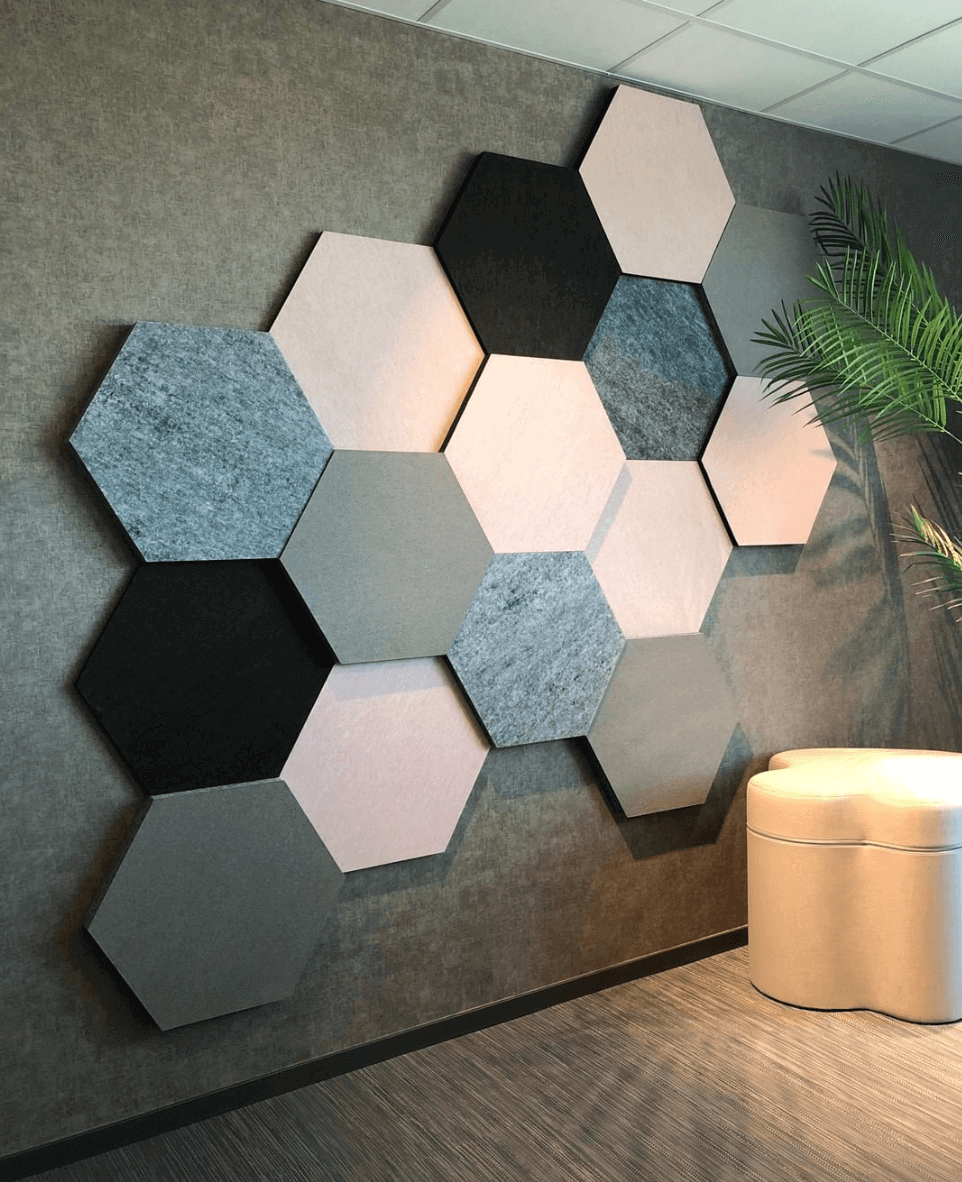
These panels are soft to the touch but stiff enough to hang on walls and ceilings. They come in a wide range of colors and can even be cut into custom shapes. Our Eco Absorb polyester panels offer a clean, modern look that fits many design styles.
Key Differences: Polyester Vs. Traditional Panels
Material and Safety
Fiberglass panels can irritate skin and lungs if the fibers get loose. Polyester panels, on the other hand, are non-irritating and do not shed particles. That makes polyester sound absorbing panels a favorite for healthcare rooms, schools, and nurseries where air quality matters. You can handle them without gloves, and there is no itch afterward.
Fire ratings are also important. High-quality polyester acoustic panels meet the same fire safety standards as fiberglass products. The difference is that polyester achieves the rating without added chemical treatments.
Sound Absorption Performance
Both materials do an excellent job of reducing echo inside a room. Fiberglass often tests slightly higher in the very deep bass range, but for speech and typical music frequencies, polyester panels perform on par. Polyester acoustic panels absorb the sounds that cause the most trouble in offices and home theaters.
If you are asking is polyester good for soundproofing, the answer depends on what you mean. No panel can block sound from leaving a room. But for taming reverberation and improving clarity, polyester works very well.
Installation and Handling
Traditional fiberglass panels are heavy and can sag over time if not mounted correctly. They also require care during installation to avoid releasing fibers. Polyester panels are lighter and easier to cut with simple tools.
We have found that most people can hang polyester acoustic panels themselves with basic hardware. The lighter weight also makes them a safer choice for ceiling clouds. And since they do not shed, you can install them without wearing protective gear.
Eco-Friendliness
Polyester sound absorbing panels are often made from recycled materials and can be recycled again at the end of their life. Fiberglass is harder to recycle and involves more energy to produce. For businesses aiming for green building certifications, polyester panels can contribute to those goals.
The production process for polyester panels uses less water and creates fewer emissions. That may not affect the sound in your room, but it does make a difference for the planet.
Cost Over Time
Upfront, fiberglass panels can sometimes cost a little less than polyester. But when you factor in easier installation, no need for protective gear, and longer life without sagging or shedding, polyester often ends up being the better value. Polyester panels also hold up well in humid spaces where fiberglass might absorb moisture and lose its shape.
Is Polyester Good for Soundproofing?
People often ask, is polyester good for soundproofing? The key distinction is that soundproofing means blocking sound from moving between rooms, while absorption controls echo inside the room. Polyester panels are designed for absorption, not blocking.
If your goal is to stop noise from escaping, you will need mass, sealed doors, and decoupled walls. But many people asking is polyester good for soundproofing are really dealing with an echo problem inside their room. In those cases, polyester acoustic panels are an excellent solution.
Making the Right Choice for Your Space
Think about who will use the room. If children, patients, or employees will be spending hours there, the non-toxic nature of polyester sound absorbing panels is a big advantage. For a home theater or music studio where only adults are present, either material can work.
Also consider the look you want. Polyester panels have a smoother, more modern finish. They can be ordered in custom colors that match your brand or decor exactly. Traditional fiberglass panels offer a similar look but may show wear more quickly in high-traffic areas.
How We Help You Choose and Install
At Sound Management Group, we make the choice easy. We analyze your space, listen to your concerns, and recommend the panel type that fits your needs. If safety and clean air are priorities, we point you toward polyester panels. For spaces that need extra low-frequency control, we may suggest a combination of both materials.
Beyond panels, a complete sound plan often involves more than absorption. For example, a sound masking systems for home theatre can cover up remaining background noise and keep your movie experience private.
And to block sound from leaking through windows, we recommend soundproofing blinds and curtains that look great while adding an extra barrier. Our team handles everything from measurement to certified installation, so you get a finished room that sounds just right.
FAQs
Do polyester panels smell or off-gas?
No. Polyester acoustic panels are made without formaldehyde or harsh chemicals. They are odorless right out of the box and safe for chemically sensitive individuals.
Can I paint polyester acoustic panels?
It is not recommended. Painting can clog the porous surface and reduce sound absorption. Instead, order panels in the color you want or use acoustically transparent fabric wraps.
How do I clean polyester sound absorbing panels?
You can vacuum them gently with a brush attachment or wipe them with a damp cloth. They resist dust and moisture better than fiberglass panels.
Are polyester panels fire rated?
Yes. High-quality polyester panels meet Class A fire ratings for commercial use. Always check the product specifications for the specific rating.

