
Quick Summary
Suspended ceiling clouds and ceiling baffles offer two distinct approaches to managing acoustics in commercial interiors. Clouds focus on horizontal absorption above occupied zones, while baffles control sound vertically across larger open volumes. Both systems improve speech clarity, reduce reverberation, and support better acoustic balance in offices, healthcare facilities, and industrial spaces. Material selection, layout planning, and integration with engineered acoustic systems all influence performance outcomes.
Suspended ceiling clouds are frequently used in commercial interiors to elevate acoustic comfort and reduce echo in open environments. Suspended ceiling clouds and ceiling baffles are often compared because each handles sound control differently, depending on architectural conditions.
This comparison helps facility planners determine the most effective direction for performance and visual intent.
What Suspended Ceiling Clouds Are in Commercial Spaces
Suspended ceiling clouds are horizontal acoustic panels installed below the structural ceiling to absorb reflected sound. They hang like floating elements and target sound waves traveling upward in open areas. These are often selected for offices, lobbies, and collaborative zones that require controlled noise levels.
These systems work well alongside echo reduction panels that help balance background sound in busy environments. Sound Management Group integrates Eco Absorb Acoustical Treatments and Acoustic Impressions Digital Prints into cloud designs for commercial interiors. Our turnkey process includes design, installation, and custom manufacturing for large-scale projects. The result is a controlled acoustic environment that reduces echo and improves speech clarity.
What Ceiling Baffles are and How they Function
Ceiling baffles are vertical acoustic panels suspended from ceilings to manage sound reflections across large spaces. They are commonly arranged in rows to create structured sound absorption zones. Their vertical orientation allows sound waves to be absorbed from multiple sides.
Ceiling baffles perform well in industrial facilities, gyms, and open-plan offices with high ceilings. Sound Delete Acoustical Treatments are often applied in these environments to reduce excessive reverberation.
We install baffle systems that integrate with Soundtite Windows for spaces needing additional noise isolation. Our configurations support commercial environments where sound movement must be controlled across long distances.
Acoustic Performance Differences Between Clouds and Baffles
Suspended ceiling clouds focus absorption directly above occupied areas. They reduce overhead reflections and increase clarity in targeted zones such as meeting tables or reception points. Ceiling baffles, in contrast, handle sound dispersion across broader vertical spaces.
Baffles absorb sound on both sides, making them effective in tall environments with continuous noise movement. Cloud systems concentrate absorption at key reflection points above occupants.
Eco Absorb Acoustical Treatments are frequently applied in both systems to elevate absorption performance. Selection depends on ceiling height, occupancy density, and overall acoustic load.
Material Options for Suspended Ceiling Clouds vs. Baffles
Suspended ceiling clouds and ceiling baffles use a range of acoustic materials that shape both performance and visual expression. Common selections include fiberglass cores wrapped in fabric, mineral fiber boards, and composite acoustic panels designed for commercial use. Suspended ceiling clouds often prioritize surface appearance since they are visible from multiple angles.
Fabric-wrapped designs remain widely used due to flexibility in color, texture, and branding integration. These materials pair well with Eco Absorb Acoustical Treatments to refine sound absorption in busy interiors. Acoustic Impressions Digital Prints are also used to align acoustic surfaces with corporate identity themes.
Ceiling baffles frequently use denser materials to maximize sound absorption on both exposed sides. Their vertical orientation allows designers to select finishes that maintain durability in high-activity environments. Material selection directly affects how each system manages reverberation in commercial buildings.
Design and Visual Impact in Interior Architecture
Suspended ceiling clouds introduce a floating visual element that enhances architectural aesthetics. They are often used to define zones within open layouts without adding physical barriers. Designers use them to create rhythm and depth across ceiling planes.
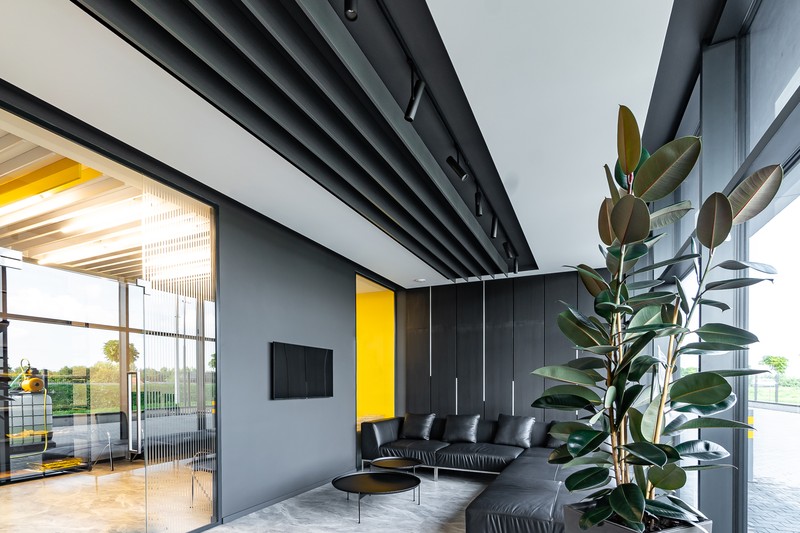
Ceiling baffles deliver a linear visual structure that emphasizes height and openness. They work well in industrial or minimalist interiors where vertical rhythm supports design intent. Acoustic Impressions Digital Prints can be applied to both systems for customized visual branding. This allows commercial spaces to align acoustics with interior identity.
Installation Approach and System Integration
Suspended ceiling clouds require precise placement planning to align with lighting, HVAC systems, and occupancy zones. Installation teams often coordinate layouts to avoid interference with overhead utilities. These systems can be customized in shape and size for specific architectural needs.
Ceiling baffles offer more flexible spacing and easier integration in large ceiling grids. They are often used in retrofit projects where structural limitations exist. We deliver full-service execution, including survey, design, fabrication, and installation. Our licensed operations in multiple states support consistent deployment across commercial projects.
Acoustic Applications Across Commercial Industries
Suspended ceiling clouds are commonly installed in offices, conference rooms, and hospitality spaces where focused acoustic control is needed. They help reduce echo above seating zones and improve speech clarity in collaborative environments. These systems are often used in areas where design and comfort must work together.
Ceiling baffles are widely used in industrial facilities, transportation hubs, gyms, and large open-plan workplaces. Their vertical layout allows consistent sound absorption across expansive ceilings with high noise activity. This makes them suitable for environments with continuous background sound.
Sound Management Group applies both systems across multiple commercial sectors using a turnkey approach that includes survey, design, manufacturing, and installation. Our solutions are supported by Sound Shadow Sound Masking Systems and Soundtite Windows for enhanced acoustic control. This integrated strategy helps stabilize interior sound conditions across complex building layouts.
Choosing Between Ceiling Clouds and Baffles
Selecting between suspended ceiling clouds and baffles depends on ceiling height, noise level, and visual objectives. Clouds work best in mid-height spaces that require focused acoustic control. Baffles are more effective in tall environments with continuous sound movement.
Commercial planners often combine both systems for layered acoustic performance. Sound Shadow Sound Masking Systems can be added to balance background sound across zones. This hybrid approach supports offices, educational facilities, and hospitality spaces that require adaptable sound control strategies. The final selection depends on how sound behaves within the interior environment.
Acoustic Strategy for Commercial Interior Environments
Suspended ceiling clouds and ceiling baffles both contribute to shaping controlled acoustic conditions across commercial properties. Performance increases when combined with engineered treatments, spatial planning, and sound masking technologies.
Together, they reduce reverberation while refining communication clarity.
In many commercial settings, these systems also assist in blocking sound and noise transmission between occupied zones. This makes them valuable for workplaces that require consistent acoustic performance across multiple floors and layouts.
Acoustic Planning with an Expert
Sound Management Group delivers integrated acoustic solutions that combine design, installation, and advanced sound control technologies for commercial spaces. Their team works with Sound Shadow Sound Masking Systems, Eco Absorb Acoustical Treatments, and Soundtite Windows to build complete interior acoustic systems.
Contact us to design a customized acoustic solution that improves performance across your commercial environment.
FAQs
What is the main difference between suspended ceiling clouds and ceiling baffles?
Suspended ceiling clouds are horizontal panels installed below the ceiling to absorb sound above specific areas. Ceiling baffles are vertical panels that hang downward to control sound across larger spaces. Clouds focus on zone-based absorption, while baffles manage broader sound movement in tall or open environments.
Where are ceiling clouds most effective in commercial spaces?
Ceiling clouds work best in offices, conference rooms, lobbies, and collaborative spaces where speech clarity is important. They help reduce echo above seating or work zones. Their placement allows targeted acoustic control without fully enclosing the space.
When should ceiling baffles be used instead of ceiling clouds?
Ceiling baffles are better suited for large, high-ceiling environments such as gyms, warehouses, airports, and industrial facilities. They control sound over greater vertical distances and reduce reverberation in spaces where noise spreads freely.
Can ceiling clouds and baffles be used together?
Yes, both systems can be combined in the same space to achieve layered acoustic performance. Clouds handle focused zones while baffles manage overall sound movement. This combination is often used in complex commercial environments to improve acoustic balance.

