
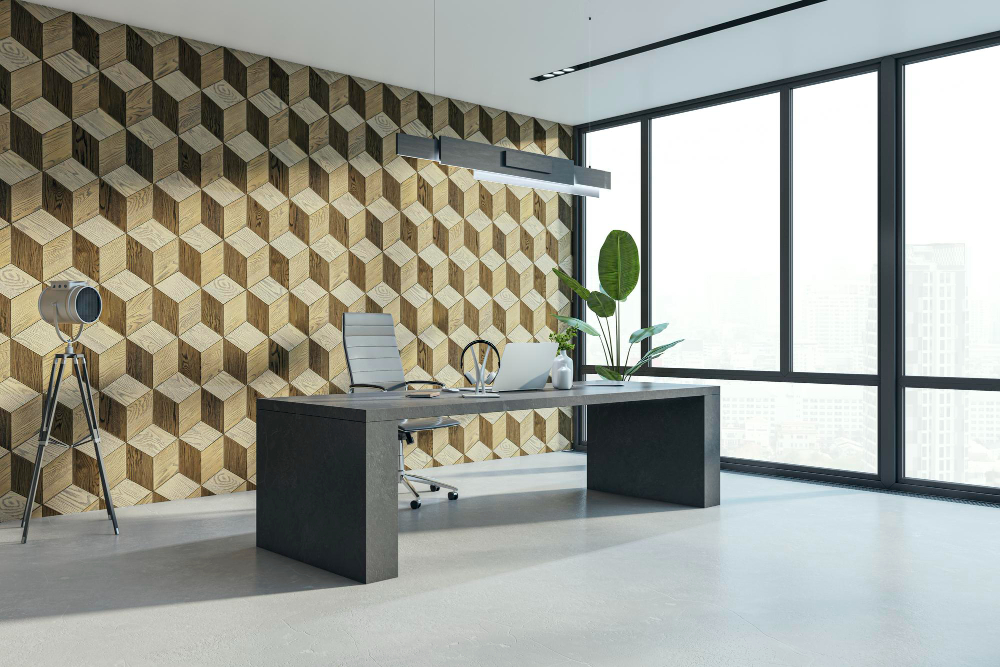
Walk into a busy open-plan office, and you'll often hear the room before you see it. Voices stack on top of each other, keyboard clicks seem amplified, and a single phone conversation carries further than it should. Knowing how to reduce echo in an office comes down to understanding one core principle: sound bounces off hard surfaces, and most modern offices are full of them.
Glass walls, concrete floors, exposed ceilings, and large desks all reflect sound back into the space. The result is reverberation: a persistent buildup of reflected sound that makes speech harder to follow and the environment harder to work in.
How to Reduce Echo in an Office
Start with the Walls
Walls are the primary culprit in most office echo problems. Sound produced anywhere in the room reaches a wall quickly and reflects straight back. Treating walls with absorptive panels interrupts this cycle. When a sound wave hits an acoustic panel, it passes into the material, and its energy is converted into negligible heat.
The most effective wall positions are the surface directly opposite the primary sound source, the side walls at the first reflection points, and the rear wall in longer rooms.
Treat the Ceiling with Echo Reduction Panels
Walls alone rarely solve the whole problem. In open-plan offices with exposed or high ceilings, a large portion of sound energy travels upward and reflects back down across the entire floor plate. Ceiling treatment is one of the most effective ways to address this.
Echo-reduction panels, clouds, banners, and baffles address overhead reflections in different ways. Clouds hang horizontally and absorb sound from both their top and bottom faces, effectively doubling their surface area compared to a wall-mounted panel.
Baffles hang vertically and are particularly effective in high-ceiling spaces where sound has a long distance to travel before reflecting. Both options work well in spaces where wall coverage is limited by windows, glazing, or existing fitout elements.
Other Surfaces that Contribute to Echo
Hard floors, bare desks, and glass partitions all contribute to a room's reflective load. Addressing multiple surfaces produces compounding results:
- Flooring: Carpet or area rugs absorb footfall noise and reduce general surface reflection, making a noticeable difference in overall room tone
- Furniture layout: Bookshelves, upholstered seating, and soft partitions scatter and absorb sound incidentally; positioning them near high-noise zones adds passive treatment without dedicated panels
- Sound masking: A low-level ambient signal introduced across the office reduces speech intelligibility at a distance.
- Zoning: Separating collaborative zones from focus areas limits how far conversational noise needs to travel. It reduces the overall acoustic load on any one part of the space
Conference rooms deserve specific attention. A glass-walled meeting room with a hard table and no ceiling treatment is one of the worst acoustic environments in any office building. Even modest panel coverage on two walls and the ceiling clouds dramatically improves speech intelligibility and reduces sound leakage into the open floor.
A Quieter Office Starts with the Right Assessment
Echo in an office is rarely a single-surface problem. It develops from the interaction between room size, surface materials, occupancy patterns, and layout. Treating it well means addressing those factors together.
At Sound Management Group, our approach to sound absorption and reverberation reduction starts with a thorough site survey that maps where sound originates and where it reflects most.Connect with our team, and we'll put together a treatment plan that fits your space and your budget.

