
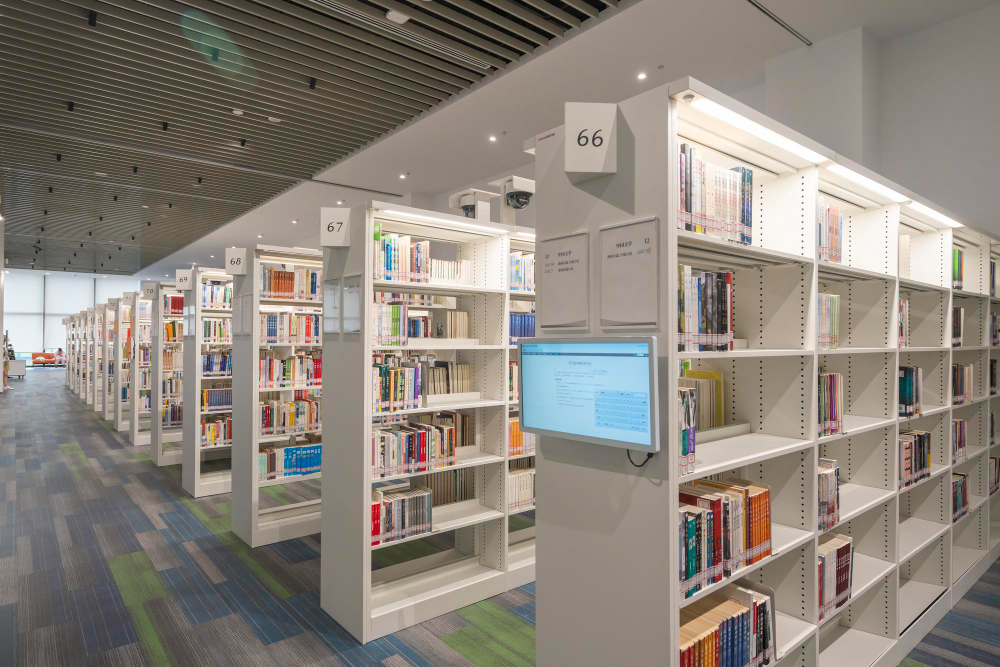
What was once a single quiet reading room has become a multi-use space juggling collaborative study groups, multimedia stations, children's sections, and individual research areas. These spaces are often all under the same roof in a library.
Managing sound across all of those functions is a real design challenge. A well-planned soundproof library room keeps the right sounds in the right places.
What Makes a Soundproof Library Room Difficult to Get Right
Most library buildings share a common problem: hard, reflective surfaces everywhere. Wood floors, concrete walls, glass windows, and high ceilings all reflect sound efficiently.
When sound has nowhere to go, it bounces around continuously, building into background noise that makes it harder to concentrate. It pushes people to speak more loudly to compensate, which only adds to the problem.
Modern libraries' soundproofing needs to account for the full range of activity happening in the space. A group study room that bleeds noise into a reading area defeats the purpose of having both. The goal is a layered design approach that addresses absorption, blocking, and masking as separate but connected challenges.
Walls, Ceilings, and the Surfaces that Matter Most
Absorption panels are the simplest tool for controlling a library's acoustics. Wall-mounted panels trap and contain sound waves before they reflect back into the room. No two parallel walls should be left untreated, or standing waves will develop between them. Spreading panels out increases the effective perimeter of the treatment and improves performance across the whole room.
Ceilings need attention too, especially in rooms with high clearance. Suspended acoustic baffles and ceiling clouds intercept sound before it travels across the room or reflects back down. In large reading halls, a combination of wall panels and ceiling-mounted treatment delivers the most balanced result.
Fabric-wrapped panels are worth considering here. They come in a wide range of sizes, colors, and custom prints, so the acoustic treatment becomes part of the design rather than something tacked on afterward.
At Sound Management Group, our Acoustic Impressions Digital Prints take this a step further, pairing custom graphic imagery with full acoustic performance. A library doesn't need to look like it's been treated — it should look like it was designed well from the start.
Sealing Doors, Floors, and the Gaps Sound Finds First
Sound travels like water, always taking the path of least resistance. In most libraries, that path runs through doors. Here's where small details make a significant difference:
- Door seals: Fitted around the perimeter of a door, seals close the gaps where noise leaks between rooms
- Door sweeps: Placed at the threshold, sweeps close the gap between the door bottom and the floor
- Solid-core doors: Heavier doors block significantly more sound than hollow-core alternatives
- Floor treatment: Dense carpet, area rugs, or acoustic underlayment absorbs impact noise and reduces reflection from hard flooring
Group study rooms adjacent to quiet reading areas need walls with a high STC rating to prevent noise bleed-through. The partition between a loud space and a quiet one is only as good as its weakest point, and that point is almost always the door.
Sound Masking for Open Areas
Absorption and sealing address a lot, but open library areas with no partitions pose a different kind of challenge. When there is no wall to block conversational noise, a sound masking solution fills the gap.
Sound masking introduces a subtle, engineered background sound that raises the ambient noise floor just enough to make nearby speech less intelligible. It makes the remaining noise far less distracting. In open reading areas and computer zones, this is often the most practical tool available for maintaining a comfortable acoustic environment.
Good Acoustic Design Is Good Library Design
A library that works acoustically is a library that works. Patrons stay longer, concentrate more effectively, and get more out of the space. The design principles behind soundproofing a room are not complicated. Treat the surfaces, seal the gaps, zone the space thoughtfully, and add masking where barriers aren't possible.
Getting the details right takes experience. At Sound Management Group, we survey every space before recommending a treatment plan, because no two libraries have the same layout, surface materials, or usage patterns. If you're working on a library project and want to discuss the acoustic side, reach out to our team.

