
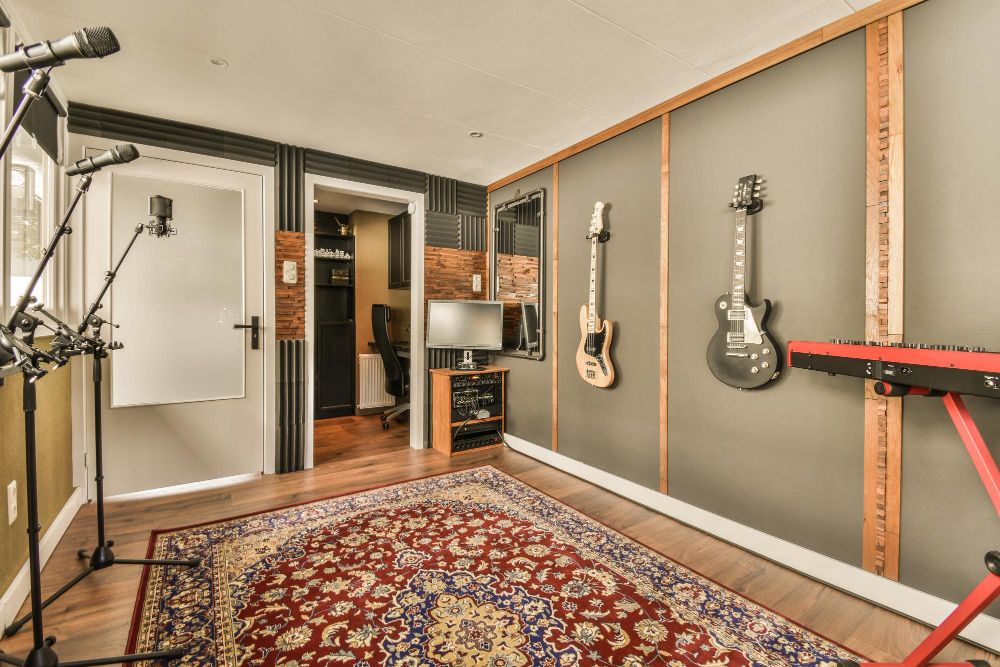
Quick Summary
Acoustic panel placement in a home studio comes down to targeting the right zones in the right order. This guide covers first-reflection points, corner bass traps, ceiling treatment, front- and rear-wall coverage, and how to avoid over-treating the room. Get the placement wrong, and even quality panels won't perform. Get it right and the whole studio changes.
Getting your home studio to sound decent on paper feels simple enough. Throw up some panels, plug in your monitors, and start recording. In practice, though, placement makes or breaks the whole setup. At Sound Management Group, we've seen plenty of studios with wall panels that are still fighting reverb, muddy bass, and reflections.
Understanding where to place acoustic panels in home studio environments separates a reliable mixing space from one that introduces constant guesswork. This guide breaks down the critical zones and explains why each one matters.
Where to Place Acoustic Panels in a Home Studio: Start With First Reflection Points
First reflection points should be addressed before anything else. These locations sit on the side walls where sound from studio monitors reflects before reaching your ears. Reflected sound arrives slightly after the direct signal, and your brain blends both together. This interaction weakens stereo clarity and creates mixes that do not translate well outside the room.
Locating these points is simple and effective. Sit at your listening position while someone moves a small mirror along the side wall at ear level. Mark the spot where the monitor becomes visible in the mirror. Repeat this process on both sides, then install an absorptive panel at each marked location.
Ceiling reflections also need attention. A reflection point exists directly above the listening position, and it often goes untreated. Installing a ceiling cloud panel in that area improves clarity in the upper frequency range and tightens the overall listening experience.
Our music and podcast studio soundproofing covers more on how room acoustics influence recording quality, if you want to dig deeper into the topic.
Behind Your Monitors and Behind You
The front and rear walls play a major role in how sound behaves inside the room, yet they are frequently overlooked.
The front wall, located behind the monitors, reflects sound back toward the speakers. This creates comb filtering, where certain frequencies build up while others cancel out due to distance differences. A properly placed panel on this wall reduces that interference and stabilizes what you hear.
The rear wall, positioned behind your listening spot, reflects sound that has already passed through the mix position. Without treatment, that energy returns and interferes with what you are trying to evaluate. Panels placed here absorb that returning sound and maintain clarity.
Clear answers to where to place acoustic panels in home studio layouts always include both front- and rear-wall treatment as part of a balanced setup.
The Corner Situation: Bass Traps Matter
Low-frequency sound behaves differently from mids and highs. It spreads in all directions and collects heavily in corners, especially where walls meet floors or ceilings. A room can sound controlled in the midrange yet remain unpredictable in the low end due to this buildup.
Standard wall panels do not handle this issue effectively. Bass traps, which use thicker and denser materials, target low-frequency energy. Installing them vertically from floor to ceiling in room corners delivers the strongest results. When full-height coverage is not possible, upper corners where walls meet the ceiling should take priority. Partial treatment in these zones still improves low-end accuracy and reduces boominess.
Our professional soundproofing installation team handles placement planning as part of the process, so nothing gets missed.
Here's a quick reference for the main zones to prioritize:
- Side walls at first reflection points (use the mirror trick to locate them)
- Ceiling above the listening position (ceiling cloud panel)
- Front wall behind the monitors (reduces comb filtering)
- Rear wall behind the listening position (absorbs escaping sound)
- Vertical corners floor-to-ceiling (bass traps for low-frequency control)
- Upper wall-ceiling corners (secondary bass buildup zones)
Don't Over-Treat the Room
More panels don't always mean better sound. A room with too much absorption loses its natural liveliness and starts to feel unnaturally dead. Recordings made in an over-treated space often sound flat, and the room gives you no useful acoustic information to work with.
Aim to treat 25 to 40 percent of your wall and ceiling surfaces, with the heaviest coverage going where the reflections are most problematic. Leave some harder surfaces in the room to maintain a sense of space. The goal is a neutral, balanced environment, not a completely dead one.
Centering panels at around six feet from the floor, or at speaker height, keeps the treatment in the zone where sound is traveling.
Get the Sound Right Before the Signal Chain
A well-placed set of acoustic panels is the most impactful upgrade a home studio can have, often more than any piece of gear. Treating the right spots in the right order gives you a foundation to work from, and your recordings and mixes will translate far better outside the room.
At Sound Management Group, we work with professional artists and producers across New Jersey, California, and Louisiana who want their studio to perform at the level their work deserves. Our Sound Delete panels, Eco Absorb treatments, and Acoustic Impressions Digital Prints are all custom-manufactured in the USA, and we handle the full process from survey through installation.
Request a consultation, and let's get your studio sounding the way it should.

